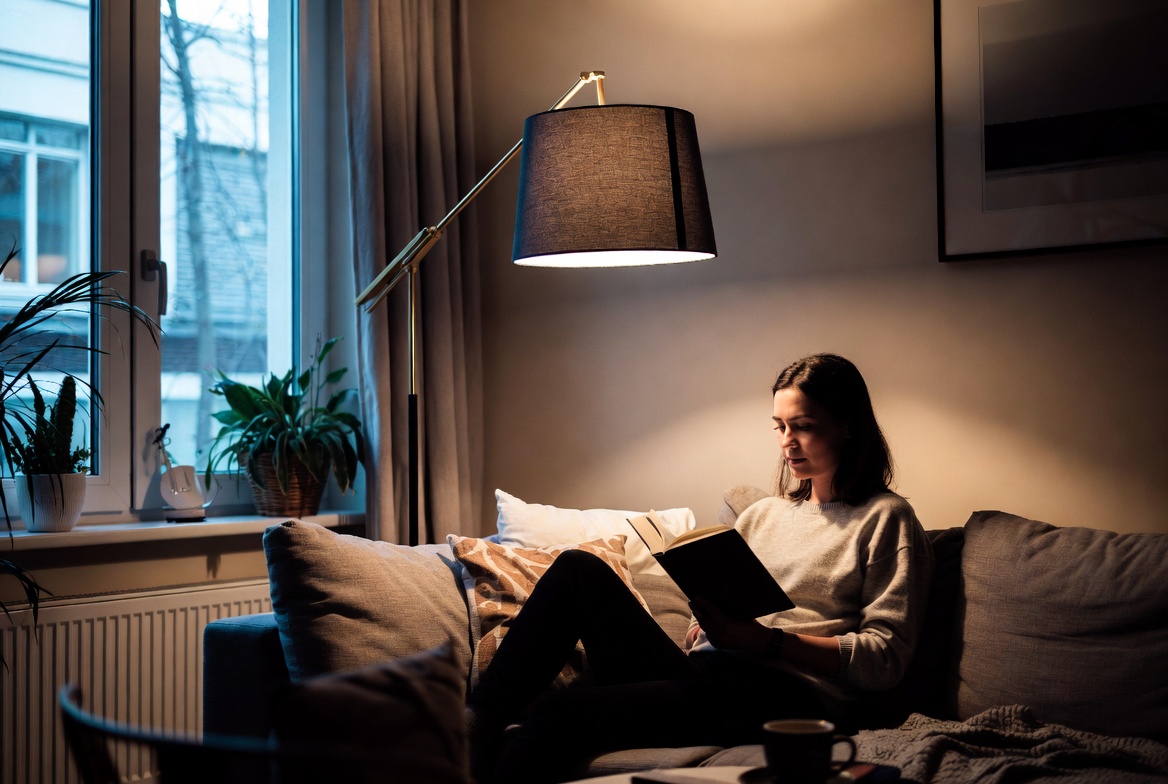
Your living room deserves better than that harsh overhead bulb you’ve been relying on. The best floor lamps for living room changes everything; it creates ambiance, highlights your favorite corner, and gives you control over brightness without calling an electrician.
But walk into any home store and you’ll face a wall of options. Arc lamps, torchieres, tripods, reading lamps, each promising to transform your space. Which one actually delivers?
Top Picks at a Glance
- Best Overall: Brightech Sky LED Torchiere
- Best for Reading: Brightech Sparq LED Arc Floor Lamp
- Best Decorative: Globe Electric Designer Series Arc Lamp
Product Reviews
1. Brightech Sky LED Torchiere Floor Lamp
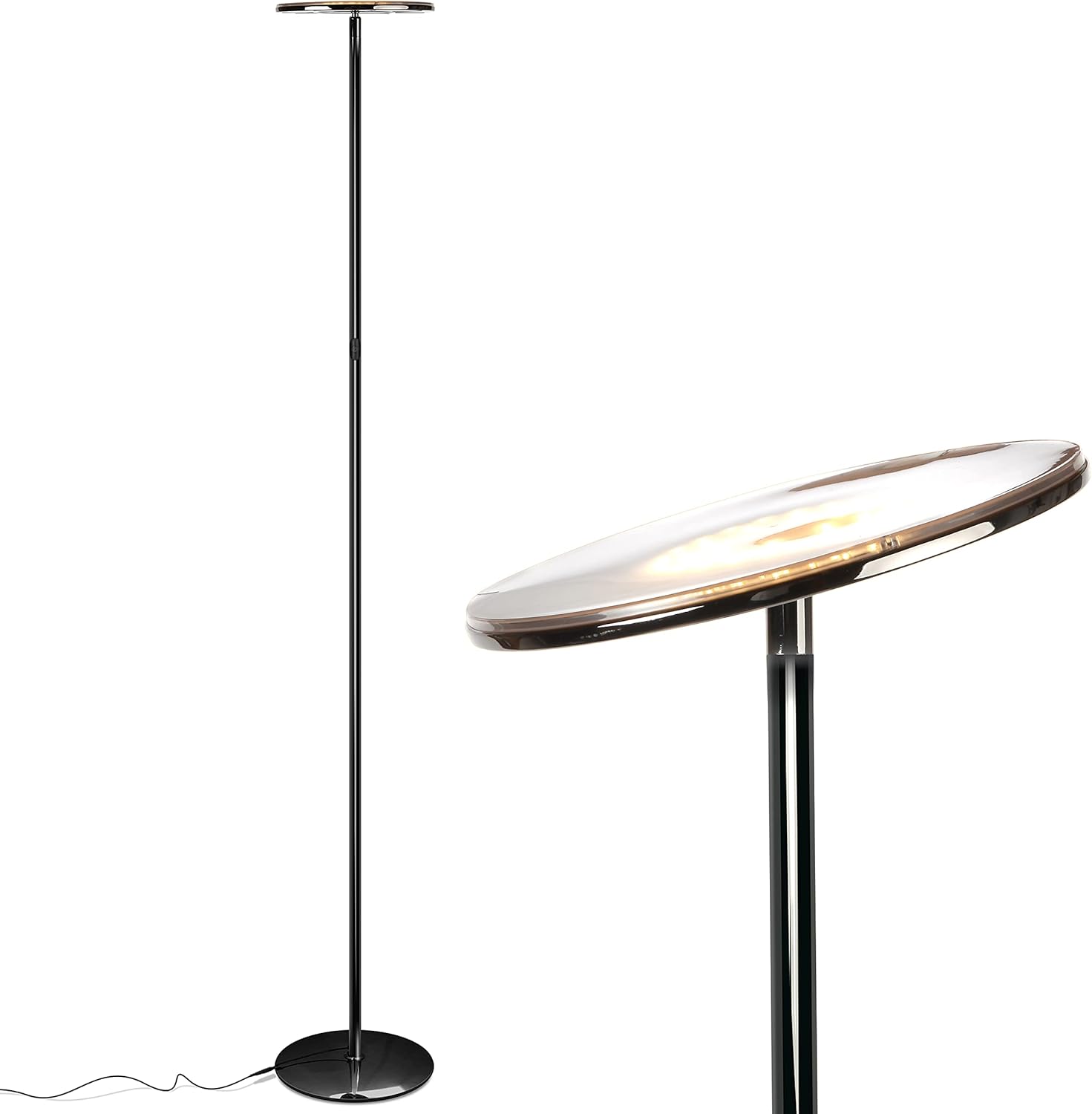
This torchiere stands 63 inches tall and throws an impressive 3000 lumens of warm white light straight at your ceiling. The upward-facing LED creates indirect illumination that fills rooms without glare or harsh shadows. Your eyes stay comfortable even during extended reading sessions.
The minimalist design features a slim metal pole topped with a disc-shaped LED fixture. It’s the kind of lamp that disappears visually while doing all the heavy lifting illumination-wise. Four finish options (nickel, brass, bronze, and black) mean you can match just about any decor aesthetic you’re working with.
What sets this apart is the touch-sensitive dimmer. You’re not stuck cycling through preset brightness levels. Press and hold the button on the pole to smoothly dim from full power down to a soft glow. The lamp remembers your preferred setting, so it comes on at the same brightness next time. No fumbling with controls in the dark.
The eight-pound weighted base provides stability that keeps the lamp upright even if you bump into it. Pets and kids won’t easily knock it over. The felt covering on the base protects your floors from scratches. At just 20 watts maximum power draw, it costs pennies to run compared to traditional halogen torchieres that guzzle 300 watts.
Pros:
- Exceptional 3000-lumen output illuminates entire rooms
- Smooth dimming from bright to subtle ambient lighting
- Energy-efficient LED technology reduces electricity costs
- Weighted base prevents tipping accidents
- Slim profile fits into tight corners easily
- Memory function restores preferred brightness setting
Cons:
- Fixed color temperature limits lighting mood options
2. Brightech Sparq LED Arc Floor Lamp
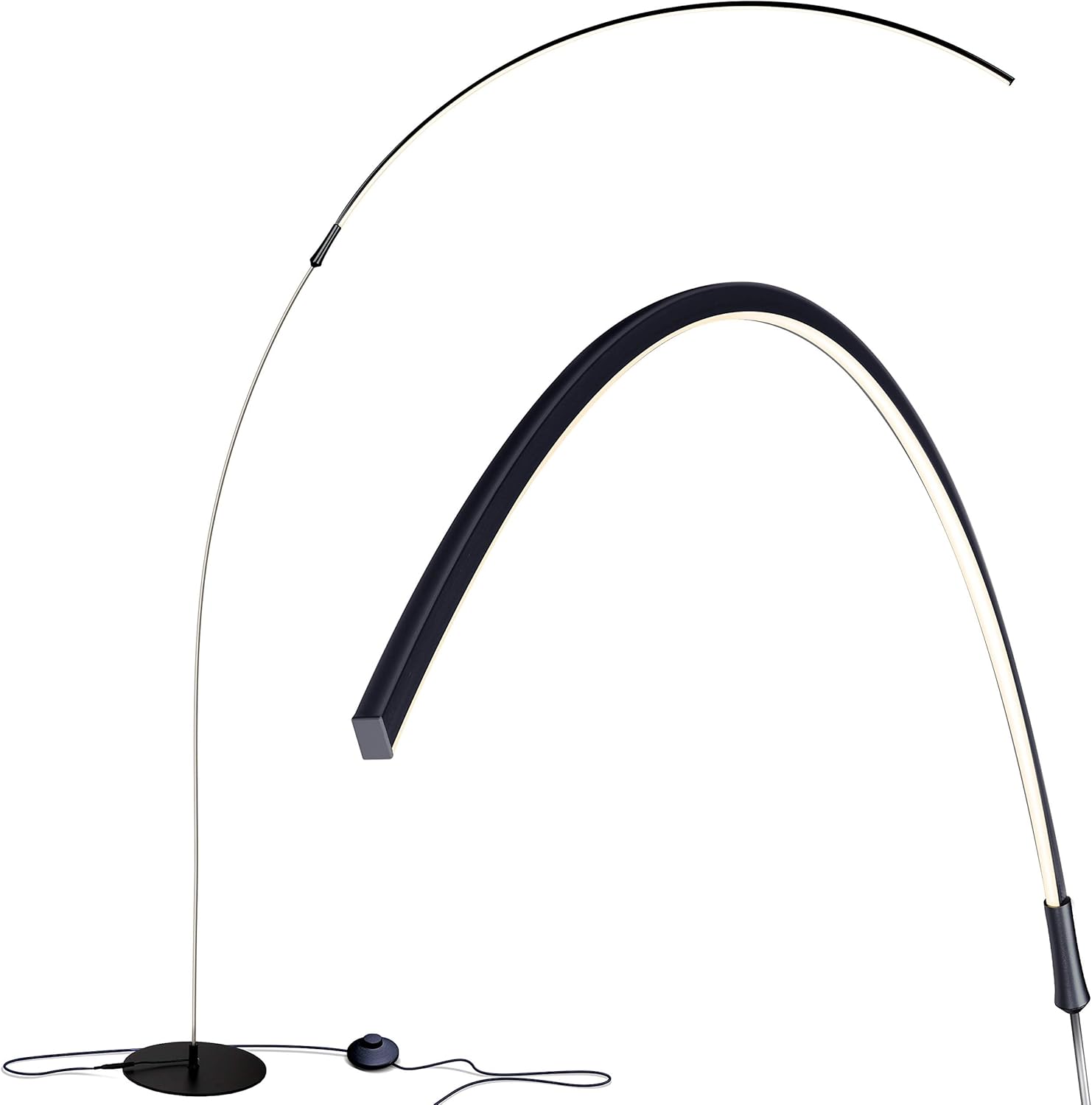
This arc lamp curves dramatically over seating areas, positioning light exactly where you need it without taking up table space. The adjustable arm extends up to 68 inches, reaching comfortably over standard sofas and reading chairs. Perfect for spaces where end tables won’t fit or where you want overhead lighting without ceiling fixtures.
The marble base weighs 15 pounds, enough to counterbalance the extended arc without tipping. It’s genuinely stable, not just marketing talk. The black finish on the metal arc looks sharp against light-colored furniture and walls. Three brightness settings via foot switch let you adjust lighting without reaching for controls.
The LED bulb sits inside a frosted globe shade that softens the light while maintaining brightness. You get focused illumination directly below the arc with minimal light spill elsewhere. This concentrated approach works well for reading or crafting but won’t light up your entire room.
The seven-foot power cord provides flexibility in placement, though you’ll still want the lamp reasonably near an outlet. The arc doesn’t rotate, so position it carefully during setup. Once placed, the lamp stays put unless you specifically decide to move it.
Pros:
- Arc design delivers light overhead without ceiling installation
- Heavy marble base ensures stability
- Three brightness levels adapt to different activities
- Focused lighting ideal for reading and tasks
- Sleek black finish suits modern interiors
- Foot switch allows convenient hands-free control
Cons:
- Fixed arc position limits flexibility
- Concentrated light doesn’t illuminate full rooms
3. Globe Electric Designer Series Arc Lamp
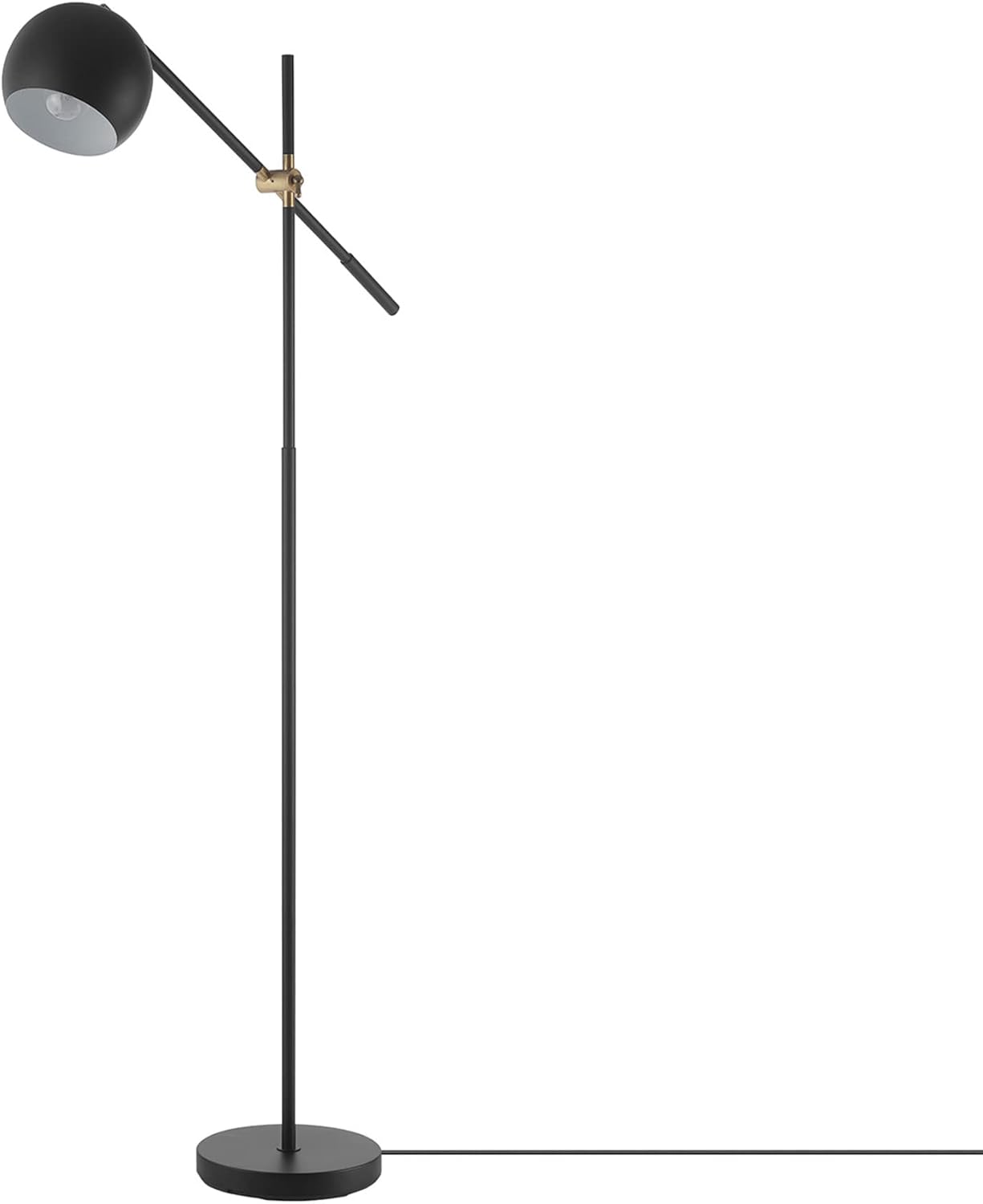
The adjustable shade on this arc lamp lets you direct light precisely where it’s needed. Tilt the five-shaded fixture to illuminate reading material, highlight artwork, or spread light across seating areas. This flexibility makes it practical for rooms where lighting needs change throughout the day.
Five separate shades each house their own bulb, giving you control over how much light the fixture produces. Turn on all five for maximum brightness or use just one or two for subtle ambient lighting. The individual switches on each shade provide this granular control without requiring special dimmer bulbs.
The weighted base keeps the lamp stable despite the extended reach and multiple shades. At about 70 inches tall with the arc extended, it makes a statement in any room. The matte black finish looks contemporary while the gold interior of each shade adds a touch of elegance. Light reflects off that gold surface, creating a warm glow.
You’ll need to supply your own bulbs, the lamp accommodates five standard E26 base bulbs up to 40 watts each. LED bulbs work great here since you’re using five at once. The energy savings add up quickly compared to incandescent options.
Pros:
- Five adjustable shades offer customizable lighting
- Individual switches control each bulb independently
- Extended arc reaches over large seating areas
- Gold shade interiors create warm light reflection
- Substantial base prevents tipping
- Modern design serves as room focal point
Cons:
- Requires purchasing five bulbs separately
- Multiple shades need occasional dust cleaning
4. Simple Designs Floor Lamp with Shelves
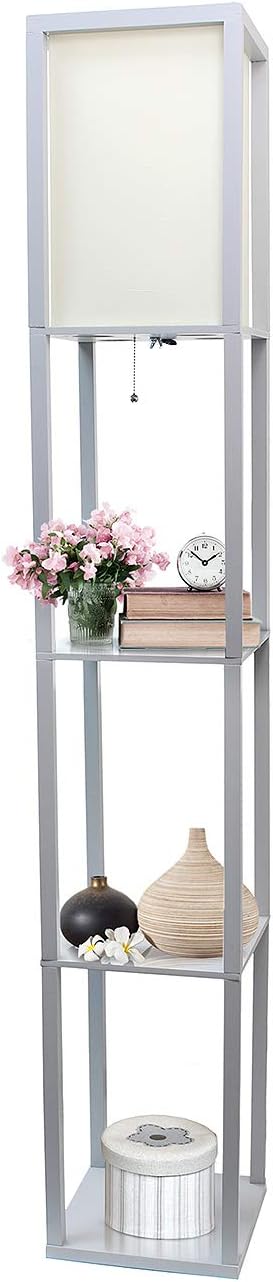
This combination lamp and storage unit solves two problems simultaneously. Three wooden shelves provide display space for books, plants, or decor while the fabric shade delivers ambient lighting. At 63 inches tall, it functions as a proper floor lamp while the shelves keep your stuff organized.
The shelves measure about 10 inches square, big enough for a few books or a small potted plant, but not massive. Think accent pieces rather than your entire book collection. The shelves attach to the lamp pole at equal intervals, creating visual balance from floor to shade.
Construction uses engineered wood for the shelves and metal for the lamp pole. It’s sturdy enough for everyday use but not heirloom quality. The assembly process takes 15-20 minutes and requires following the instructions carefully. Mix up the shelf order and things won’t align properly.
The lamp accepts standard bulbs up to 100 watts. Install a daylight LED for a bright, energetic feel or warm white for cozy evening ambiance. The fabric shade in neutral colors blends with most decor while the wooden shelves add warmth. This works especially well in smaller spaces where every piece of furniture needs to earn its keep.
Pros:
- Dual functionality combines lighting and storage
- Shelves provide display space for decorative items
- Compact footprint conserves floor space
- Standard bulb compatibility offers flexibility
- Assembly completed in under 30 minutes
Cons:
- Engineered wood less durable than solid construction
- Limited shelf weight capacity restricts heavy items
5. Addlon Tripod Floor Lamp
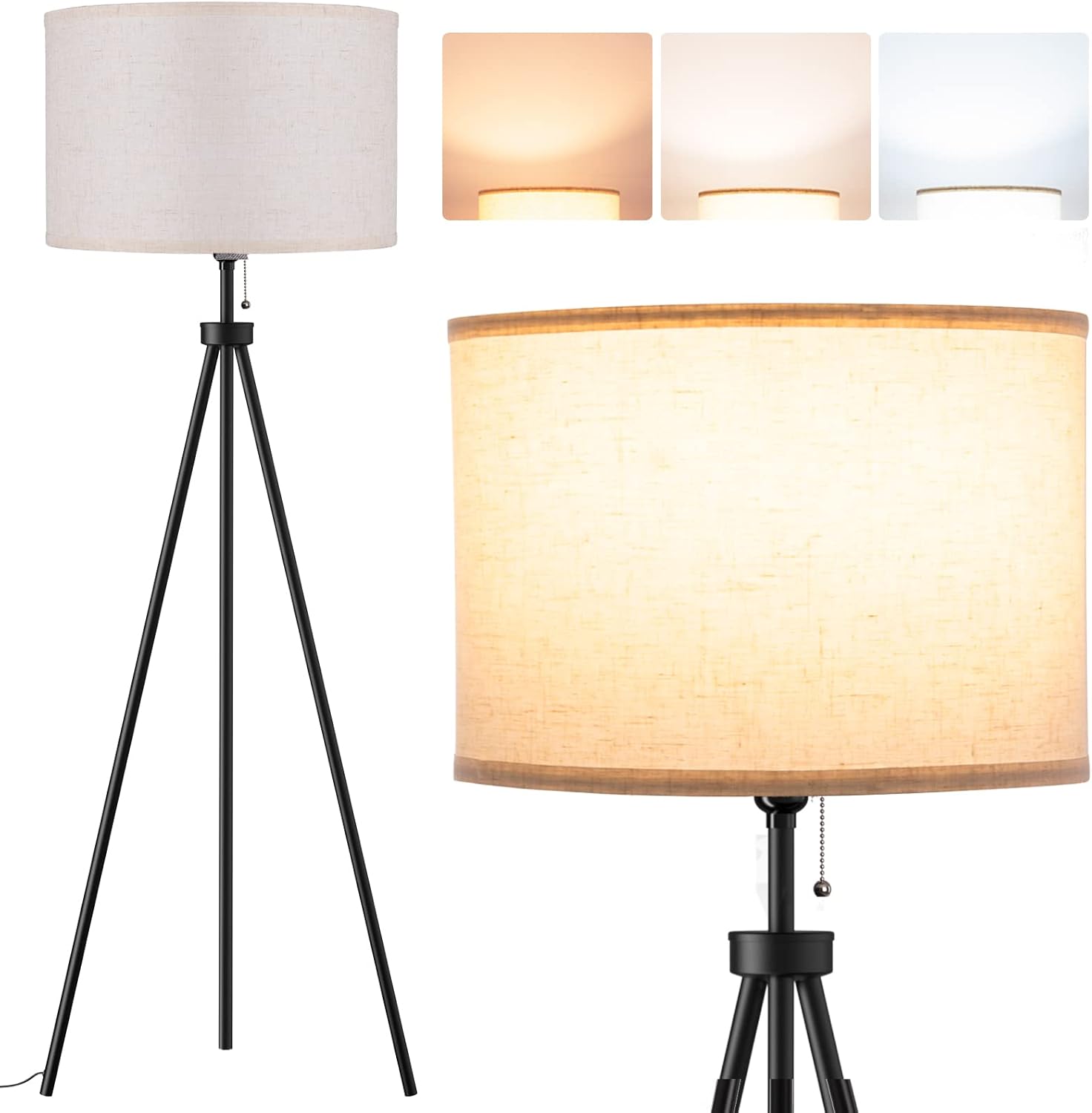
The three-legged tripod design brings a mid-century modern vibe that works in contemporary and traditional spaces alike. Natural wood legs contrast beautifully with the white fabric drum shade, creating visual interest without overwhelming your existing furniture.
This lamp stands about 61 inches tall with a 12-inch diameter shade. The fabric diffuses light evenly, eliminating hot spots and creating soft ambient illumination. You get enough brightness for general room lighting but not the intensity needed for detailed tasks. Think conversation areas rather than reading nooks.
Assembly takes five minutes, screw the three legs into the center pole, attach the shade, insert a bulb. The tripod stance provides surprising stability despite looking delicate. The wide footprint does mean you need adequate floor space, so measure your corners before ordering.
Standard E26 bulb compatibility gives you control over brightness and color temperature. Install a smart bulb and you can adjust lighting from your phone. Or stick with a basic LED bulb and keep things simple. Maximum recommended wattage is 100 watts, though LED equivalents use far less actual power.
Pros:
- Mid-century aesthetic complements multiple decor styles
- Fabric shade creates soft, diffused lighting
- Compatible with standard and smart bulbs
- Simple assembly requires no tools
- Affordable price point for statement lighting
Cons:
- Wide tripod base requires more floor space
- Fabric shade attracts dust over time
Best Floor Lamps for Living Rooms Buying Guide
1. Determine Your Lighting Purpose
Floor lamps serve different functions, and clarity about your needs prevents buying the wrong type. Task lighting requires focused, bright illumination concentrated in one area. Reading lamps with adjustable arms or directional shades work best here. You need enough lumens to prevent eye strain, aim for at least 450 lumens for comfortable reading.
Ambient lighting fills entire rooms with soft, general illumination. Torchiere lamps that bounce light off ceilings excel at this. They create even, shadow-free lighting perfect for conversation areas and family rooms. Look for fixtures producing 1500-3000 lumens for medium-sized living rooms.
Accent lighting highlights specific features like artwork, architectural details, or favorite furniture pieces. Spotlights or lamps with adjustable heads let you aim light exactly where you want it. These typically use lower wattage since they’re meant to draw attention rather than illuminate entire spaces.
2. Match Lamp Height to Your Space
Standard floor lamps stand 58-64 inches tall, positioning the light source at a comfortable height for most rooms. These work well in spaces with 8-foot ceilings and standard furniture. The shade typically sits at or slightly above eye level when you’re seated.
Shorter lamps in the 48-55 inch range suit rooms with lower ceilings or when you want light positioned lower. These work nicely beside low-profile furniture like futons or floor cushions. They create a more intimate, grounded feeling in the space.
Tall lamps exceeding 70 inches make sense in rooms with high ceilings or when you need light to reach over tall furniture. Arc lamps often fall into this category, extending upward and outward to position light where traditional lamps can’t reach. Measure your ceiling height and furniture to ensure proper scale.
3. Choose Between LED and Traditional Bulbs
LED floor lamps cost more upfront but save money long-term through reduced electricity consumption. A 20-watt LED produces the same light as a 100-watt incandescent while lasting 15-20 years with normal use. You’ll replace the entire lamp before the LED burns out in most cases.
Integrated LED lamps build the light source directly into the fixture. You can’t replace the bulb, but you typically won’t need to. These lamps often include features like dimming and color temperature adjustment. The tradeoff is less flexibility if you want to change lighting characteristics later.
Lamps accepting standard bulbs let you swap in different options as needed. Start with warm white LEDs for cozy evening lighting, then switch to daylight bulbs if you need energizing task lighting. Smart bulbs add voice control and scheduling. This flexibility comes at the cost of needing to replace bulbs occasionally.
4. Consider Your Decor Style
Modern and contemporary spaces benefit from clean lines and minimal decoration. Slim metal poles, geometric shapes, and matte finishes work well. Look for lamps without fussy details or ornate embellishments. Chrome, brushed nickel, and matte black finishes complement this aesthetic.
Traditional rooms call for lamps with more decorative elements. Think fabric shades, turned wooden bases, and brass or bronze finishes. These lamps should feel substantial rather than spindly. Torchiere styles with classic proportions fit nicely in formal living rooms.
Mid-century modern decor pairs perfectly with tripod bases, wood accents, and sculptural shapes. Look for lamps that feel like furniture pieces rather than purely functional objects. Walnut wood legs combined with fabric shades capture this aesthetic beautifully.
5. Evaluate Stability and Safety Features
A lamp’s base determines whether it stays upright or becomes a tipping hazard. Weighted bases using marble, concrete, or heavy metal provide the best stability. Lighter bases work fine for small lamps but become problematic as lamp height and reach increase.
Arc lamps need especially stable bases since they extend horizontally. A 15-pound base isn’t excessive for an arc lamp, it’s necessary engineering. Check weight specifications before buying. Manufacturers cutting corners on base weight create unsafe products.
Felt or rubber pads on the base protect floors from scratches while providing friction to resist sliding. This small detail matters more than you’d think. Without floor protection, you’ll damage hardwood and tile every time the lamp moves slightly.
6. Factor In Bulb Replacement and Maintenance
Integrated LED lamps require no bulb changes but can’t be upgraded or repaired if they fail. This works fine when the lamp costs under $100, but feels risky on expensive statement pieces. Consider whether you’re comfortable with this limitation.
Lamps using standard bulbs need periodic replacements, but the process takes seconds. Keep the bulb type written down somewhere; E26 base, 100-watt equivalent, 3000K color temperature. Walk into any hardware store with those specs and you’ll find what you need.
Fabric shades collect dust and require occasional vacuuming or wiping. Metal and glass shades need less maintenance but show fingerprints more readily. If you’re not into regular dusting, skip elaborately shaded designs with lots of crevices.
Placement Strategies for Maximum Effect
Position floor lamps where you actually spend time rather than where they look good on paper. A lamp illuminating an empty corner wastes its potential. Place it beside your reading chair, near the sofa, or anywhere you frequently sit. The light should reach your lap and hands comfortably.
Corner placement works well for torchiere lamps since the light bounces off two walls instead of one. This creates even more ambient illumination throughout the room. Leave at least six inches between the lamp and the wall to prevent heat buildup and allow air circulation.
Pairing two matching lamps creates symmetry and provides balanced lighting. Position them on either side of a sofa or fireplace for a classic, pulled-together look. This approach works especially well in formal living rooms where symmetry feels appropriate.
Layer your lighting by combining floor lamps with table lamps and overhead fixtures. This gives you multiple light sources to mix and match depending on the time of day and activity. Use bright task lighting for reading, then switch to ambient floor lamps for evening relaxation.
Color Temperature Explained Simply
Warm white bulbs (2700-3000K) produce a yellowish glow similar to traditional incandescent bulbs. They create cozy, relaxing environments perfect for living rooms where you unwind after work. This color temperature makes skin tones look natural and enhances warm colors like reds and oranges.
Neutral white (3500-4100K) falls between warm and cool, providing clear illumination without strong color bias. This works well in multi-purpose spaces where you need good visibility for various activities. It’s less cozy than warm white but more inviting than cool white.
Cool white (5000K+) produces bright, bluish light that increases alertness and enhances cool colors. It works better in offices and task areas than living rooms. Unless you specifically need energizing light for hobbies or work, stick with warmer temperatures for living spaces.
Frequently Asked Questions
1. How bright should a living room floor lamp be?
Living room floor lamps should produce between 1500-3000 lumens for general ambient lighting in medium-sized rooms. Task-specific lamps for reading need at least 450 lumens focused in one area. Consider the room size and natural light, larger or darker rooms need brighter lamps. Multiple lamps at moderate brightness often work better than one extremely bright fixture.
2. What type of floor lamp gives the most light?
Torchiere floor lamps with upward-facing LED heads produce the most usable light for living rooms. They bounce light off ceilings to create even, shadow-free illumination throughout the space. Models like the Brightech Sky produce 3000 lumens while consuming just 20 watts of power. This indirect lighting approach prevents glare while maximizing room brightness.
3. Can I use smart bulbs in any floor lamp?
Standard E26 or E27 bulb sockets accommodate smart bulbs, but check the lamp’s maximum wattage rating first. Smart bulbs use minimal power, so wattage rarely creates problems. However, lamps with enclosed shades may trap heat and shorten smart bulb lifespan. Integrated LED lamps don’t accept any bulbs, including smart versions.
4. How do I stop my floor lamp from tipping over?
Choose lamps with weighted bases of at least 8-10 pounds for standard heights and 15+ pounds for arc designs. Position lamps away from high-traffic areas where they’re likely to be bumped. Some manufacturers sell additional base weights that increase stability. Felt pads on the base increase friction and prevent sliding on smooth floors.
5. What’s the difference between torchiere and arc floor lamps?
Torchiere lamps point light upward toward ceilings, creating indirect ambient illumination throughout rooms. They excel at general lighting. Arc lamps extend horizontally over seating areas, directing focused light downward for reading and tasks. Arc lamps provide concentrated illumination in specific spots while torchieres light entire spaces evenly.
6. Do LED floor lamps get hot?
LED floor lamps stay cool compared to halogen or incandescent versions. The LEDs themselves produce minimal heat, and any warmth dissipates through metal housings. You can safely touch LED lamp heads after hours of use. This cool operation reduces fire risk and prevents damage to nearby fabrics and furniture.
7. How far from the wall should a floor lamp be placed?
Leave 6-12 inches between floor lamps and walls to allow proper air circulation and prevent heat accumulation. This spacing also makes it easier to access switches and clean behind the lamp. Arc lamps need additional clearance since they extend horizontally, the arc end should clear walls and furniture by several inches.
8. Can floor lamps provide enough light without overhead fixtures?
Yes, strategically placed floor lamps can adequately light living rooms without overhead fixtures. Use a combination of torchiere lamps for ambient light and reading lamps for tasks. Plan on one 2000-3000 lumen torchiere as primary lighting plus 1-2 additional lamps for flexibility. This layered approach often creates more pleasant lighting than harsh overhead fixtures.
9. What’s the best floor lamp style for small living rooms?
Slim torchiere lamps with small footprints work best in compact living rooms. Their vertical orientation conserves floor space while the upward-directed light makes ceilings feel higher. Avoid bulky multi-shade designs or wide tripod bases that consume valuable square footage. Models like the Brightech Sky measure just 10 inches across at the base.
10. How often do LED floor lamps need bulb replacement?
Integrated LED floor lamps typically last 20,000-50,000 hours, potentially 20+ years with normal use. They never need bulb replacement, though the entire lamp may eventually fail. Floor lamps using replaceable LED bulbs need new bulbs every 10-15 years depending on usage. Standard incandescent or halogen bulbs require replacement every 1-2 years.
Conclusion
The best floor lamp for living room spaces balances brightness, style, and practicality. Whether you need ambient torchiere lighting to fill the entire room or focused task lighting for reading, the right lamp transforms how you use your space.
Take time to measure your room, consider your actual lighting needs, and think about how the lamp fits your decor. The models we’ve covered offer proven performance at reasonable prices. Your living room deserves lighting that works as hard as it looks good. Choose wisely and you’ll enjoy better illumination for years to come.