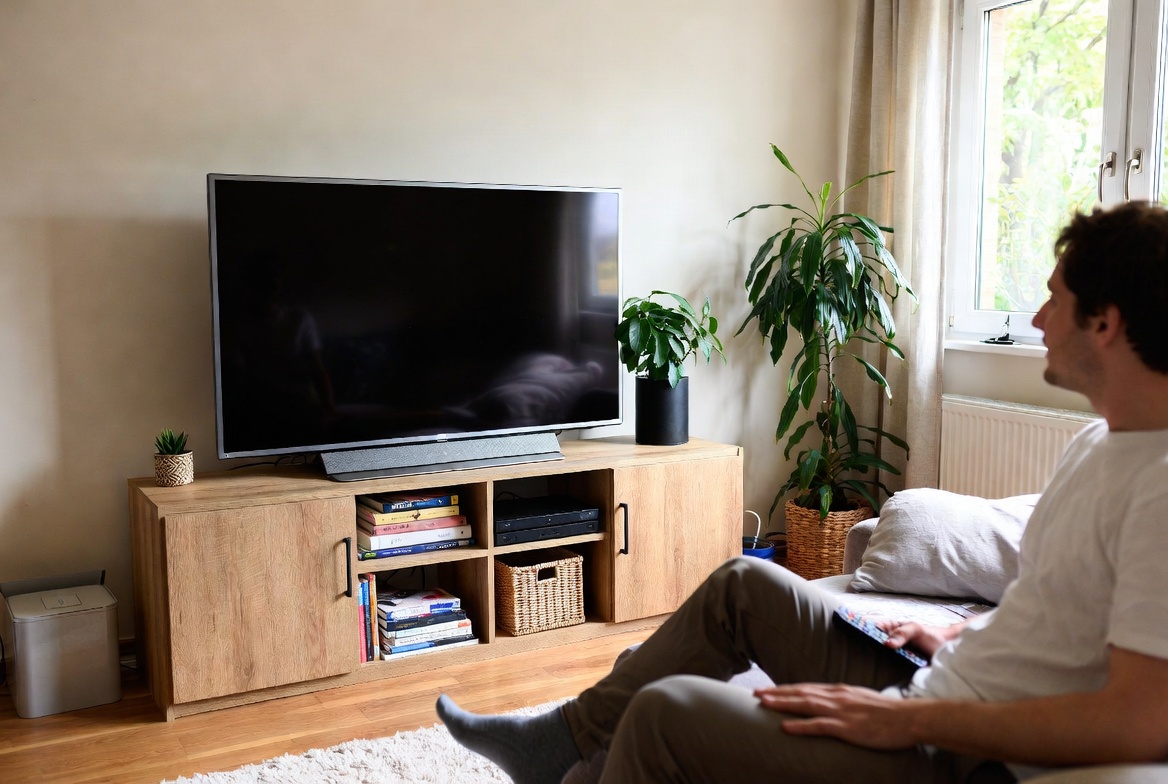
A TV stand does more than hold your television. The right one organizes gaming consoles, hides tangled cords, stores media collections, and anchors your entire living room design. The wrong one becomes a cluttered eyesore that makes you wish you’d spent more time researching.
You don’t need to settle for generic particle board furniture that falls apart after six months. We’ve researched dozens of options to find the best TV stands with storage that actually deliver on storage capacity, durability, and style.
Top Picks at a Glance
- Best Overall: VASAGLE Farmhouse TV Stand with Barn Doors – Maximum storage meets timeless style
- Best Modern Design: YITAHOME Entertainment Center with LED Lights – Contemporary features with practical function
- Best Value: JARHETUN TV Stand with Open Shelves – Budget-friendly without sacrificing quality
Product Reviews: Best TV Stands with Storage
1. VASAGLE Farmhouse TV Stand with Sliding Barn Doors

This farmhouse stand combines storage capacity with character. The sliding barn doors operate on smooth metal tracks, gliding open to reveal spacious cabinets on both sides. The center section stays open, perfect for cable boxes and gaming consoles that need ventilation and remote access.
The stand accommodates TVs up to 65 inches comfortably. The weight capacity hits 185 pounds, handling even the heaviest modern televisions plus decorative items on top. The tabletop measures 58 inches wide and sits at a comfortable viewing height for standard sofas and chairs.
Inside each cabinet, you’ll find adjustable shelves with three height positions. This flexibility matters when storing items of varying sizes. Tall vases, board game boxes, or DVD collections all fit with proper shelf positioning. The shelves hold substantial weight without sagging, using quality particle board with reinforcement.
The cable management holes sit strategically in the back of each compartment. Thread power cords, HDMI cables, and other connections through these openings, keeping them organized and out of sight. The openings are large enough for plugs with bulky power adapters.
Assembly takes roughly 90 minutes with two people working together. The instructions use clear diagrams, and all hardware comes labeled. A power drill speeds things up, though manual screwdrivers work fine. The finished piece feels solid and stable, not wobbly like cheaper alternatives.
Pros:
- Sliding barn doors add farmhouse charm
- Holds TVs up to 65 inches securely
- Adjustable shelves accommodate various items
- Strategic cable management holes
- Sturdy construction supports heavy weight
- Two-tone finish suits multiple decor styles
Cons:
- Assembly requires two people for efficiency
2. YITAHOME Entertainment Center with Power Outlet and LED Lights

The built-in power outlet changes everything. Four standard outlets plus two USB ports sit right on the stand, eliminating the need to reach behind furniture for phone chargers or game controller cables. The power strip includes overload protection for safety.
The LED light strips install along the bottom and inside the shelving. You control colors and brightness with a remote, choosing from multiple color options and transition effects. While not essential, the ambient lighting creates atmosphere for movie nights and looks impressive when entertaining.
Storage capacity includes two large cabinets with doors and three open shelves. The cabinets hide clutter while open shelves display decorative items or frequently accessed equipment. The combination provides both concealment and accessibility.
The stand measures 55 inches wide, suiting TVs from 50 to 60 inches. The proportions work well in medium-sized rooms without overwhelming the space. The contemporary design features clean lines and a matte black finish that blends with modern decor schemes.
The particleboard construction uses engineered wood rather than solid wood, keeping costs reasonable. The finish resists scratches better than expected, maintaining appearance even after moving items in and out frequently. The edges feature protective banding to prevent chipping.
Pros:
- Built-in power outlets and USB ports
- LED lights add customizable ambiance
- Combination of cabinets and open shelves
- Contemporary design suits modern spaces
- Scratch-resistant finish maintains appearance
- Remote control for easy light adjustment
Cons:
- LED lights may feel gimmicky to some users
3. WAMPAT Modern TV Stand with Glass Doors

The glass doors showcase rather than hide your equipment. If you’ve invested in attractive gaming consoles or vintage audio equipment, this display approach highlights your collection. The tempered glass feels substantial and safe, not fragile like standard glass.
Six fabric drawers provide hidden storage for controllers, remotes, batteries, and cables. The soft-close mechanism prevents slamming, operating smoothly even when drawers are packed full. The fabric construction means contents won’t rattle or scratch against hard surfaces.
The stand extends 58 inches wide and reaches 28 inches tall. This taller profile creates substantial storage volume while maintaining proportions suitable for most living rooms. The extra height also positions TVs at ergonomic viewing angles for sectional sofas or higher seating.
The central glass compartment includes an adjustable shelf with three positions. This houses AV receivers, streaming devices, or decorative items behind protective glass. The side drawers organize smaller items that would otherwise clutter visible surfaces.
Cable management includes multiple pass-through holes in the back panel. The openings accommodate thick bundled cables without forcing tight bends that damage wires. Tie points inside compartments help bundle cables for a cleaner appearance.
Pros:
- Glass doors display attractive equipment
- Six fabric drawers organize small items
- Soft-close drawers operate quietly
- Taller design increases storage capacity
- Multiple cable management solutions
- Adjustable shelf adapts to various items
Cons:
- Glass doors show fingerprints and smudges
- Some units arrive with misaligned pre-drilled holes
4. JUMMICO Mid-Century Modern Media Console

The mid-century aesthetic never goes out of style. Tapered wooden legs, clean lines, and minimalist hardware create a timeless look that works across decades of design trends. The sliding barn doors feature a bright white finish contrasting with wood-tone accents.
Inside, you’ll find ample cabinet space divided into two compartments. Each side provides room for approximately 15 to 20 standard DVD cases or equivalent storage boxes. The cabinets work beautifully for hiding less attractive necessities like router equipment and tangled cables.
The central open area accommodates media players, gaming consoles, and sound bars. The shelf-free design provides maximum vertical clearance for equipment with ventilation needs. Heat dissipates effectively, preventing electronics from overheating during extended use.
The stand measures 63 inches wide, supporting TVs up to 70 inches comfortably. The width provides stable support for larger screens without looking oversized in average living rooms. The clean white finish brightens spaces and pairs well with colorful accent pieces.
The construction uses MDF with a painted finish rather than solid wood. While not heirloom-quality, the materials prove durable for everyday use. The finish wipes clean easily, resisting water rings from drink glasses placed on top.
Pros:
- Timeless mid-century modern styling
- Bright white finish adds visual lightness
- Spacious cabinets hide clutter effectively
- Open center allows equipment ventilation
- Clean lines suit minimalist aesthetics
- Supports larger TVs up to 70 inches
Cons:
- MDF construction less durable than solid wood
5. JARHETUN TV Stand with Open Shelves

This budget-friendly option focuses on essential function without frills. Three open shelves in a staggered configuration provide plenty of storage while maintaining an airy, uncluttered appearance. The open design suits smaller living rooms where closed cabinets might feel heavy.
The industrial styling pairs metal frames with rustic brown wood-tone shelving. This combination works in lofts, modern farmhouse spaces, or contemporary rooms needing an edge. The metal framework feels surprisingly sturdy given the affordable price point.
Each shelf supports up to 30 pounds evenly distributed. This handles soundbars, receivers, game consoles, and media collections without concern. The shelves measure deep enough for standard components without equipment hanging over edges awkwardly.
The stand accommodates TVs up to 55 inches, making it ideal for secondary bedrooms, apartments, or smaller living areas. The compact 50-inch width fits spaces where larger stands overwhelm. The lower profile also works well in rooms with lower ceilings.
Assembly requires minimal effort. The shelves bolt to the metal frame using pre-drilled holes that actually align correctly. Total build time runs about 30 minutes working solo. The included hardware feels adequate for the price range.
Pros:
- Affordable price for budget-conscious buyers
- Industrial style adds character to spaces
- Open shelves prevent closed-in feeling
- Easy solo assembly in minimal time
- Compact size suits smaller rooms
- Sturdy metal frame construction
Cons:
- Open storage doesn’t hide clutter
- Limited to smaller TV sizes
6. Furologee Entertainment Center with Soundbar Shelf

The dedicated soundbar shelf addresses a common problem. Most stands either force soundbars to sit directly on the surface, blocking TV remotes, or require creative stacking solutions. This dedicated middle shelf positions soundbars at optimal height for audio projection.
The stand includes both open shelving and closed storage via a fabric drawer. The drawer slides smoothly on metal runners, providing convenient hidden storage for remotes, cables, and small accessories. The fabric construction prevents scratching delicate items.
The rustic brown finish mimics wood grain convincingly despite using engineered wood. The finish resists minor scratches and wipe marks better than cheaper laminates. The color works across various design aesthetics from farmhouse to industrial.
At 55 inches wide, the stand suits TVs from 50 to 60 inches comfortably. The proportions balance visual weight appropriately for mid-sized screens. The stand measures 16 inches deep, providing adequate shelf depth without protruding too far into living spaces.
The cable management system includes rear cutouts in each shelf level. This allows cords to drop through multiple levels, keeping them organized vertically rather than bunched horizontally. The system works particularly well when using multiple devices across different shelves.
Pros:
- Dedicated soundbar shelf at optimal height
- Fabric drawer protects stored items
- Realistic wood-grain finish
- Multi-level cable management system
- Compact depth saves floor space
- Quick assembly with clear instructions
Cons:
- Single fabric drawer limits hidden storage
Buying Guide: Factors to Consider When Buying the Best TV Stands with Storage
1. Measure Your TV and Space Properly
The best TV stands with storage should extend at least 3 to 6 inches beyond your television on each side for visual balance and stability. A 55-inch TV needs a stand measuring 60 to 65 inches wide minimum. Measure your actual TV width, not just the screen diagonal size.
Consider room dimensions too. The stand should leave at least 2 feet of clearance on both sides for traffic flow. In smaller rooms, this might mean choosing a smaller TV to accommodate proper furniture sizing. Measure the distance from your sofa to the TV location, ensuring proper viewing angles.
Account for depth as well. Stands typically range from 15 to 18 inches deep. Ensure this depth doesn’t block walkways or make rooms feel cramped. Corner placements might allow deeper stands, while wall-adjacent positions need slimmer profiles.
2. Assess Your Storage Requirements
List everything needing storage before shopping. Gaming consoles, receivers, streaming devices, DVD collections, and gaming accessories all require space. Measure larger items to ensure cabinet dimensions accommodate them.
Consider closed versus open storage based on what you’re storing. Attractive equipment looks fine on open shelves, while cable bundles and remotes hide better in drawers or behind doors. A mix of both typically serves most households best.
Think about future needs too. Plan for equipment you might add rather than buying just enough for current items. That streaming device collection tends to grow, and gaming consoles multiply over time.
3. Evaluate Construction Quality
Check weight capacity for both the top surface and shelves. Flimsy stands using thin particle board sag quickly under heavy equipment. Quality stands specify weight limits, typically ranging from 100 to 200 pounds for the top surface.
Examine shelf construction in product photos. Adjustable shelves add versatility, but only if they include proper support pins or clips. Fixed shelves sometimes provide more stability for heavy items.
Look for reinforced corners and backs. Stands with just staples and glue fail quickly. Better construction uses dowels, metal brackets, or interlocking joints. These details rarely appear in marketing but show up in assembly instructions and user reviews.
4. Consider Cable Management Features
Cable management separates functional stands from frustrating ones. Look for large pass-through holes in the back panel and shelves. Small holes force cables to bend sharply, potentially damaging connections.
Some stands include internal cable channels or tie points for bundling wires. These features maintain organization even when adding or removing equipment. They also improve airflow around cables, reducing overheating risks.
The best systems allow routing cables between levels without creating visible wire runs. Vertical cable management looks cleaner than horizontal bundles stretching across shelf backs.
5. Match Style to Your Room Aesthetic
Farmhouse stands with barn doors and distressed finishes suit rustic, country, or shabby-chic decor. The chunky construction and visible hardware create casual warmth appropriate for family-focused spaces.
Mid-century modern pieces feature clean lines, tapered legs, and minimal ornamentation. These work in contemporary, minimalist, or Scandinavian-inspired rooms. The timeless styling ages well across trends.
Industrial designs combine metal frames with wood elements. The raw, unfinished aesthetic fits lofts, urban apartments, or spaces with exposed brick and concrete. The utilitarian approach prioritizes function.
6. Plan for Assembly Requirements
Most of the best TV stands with storage require assembly. Check whether instructions include word descriptions or rely solely on diagrams. Diagram-only instructions frustrate many people, especially for complex builds.
Note whether two people are required or if solo assembly works. Larger stands often need help aligning pieces during construction. Attempting two-person jobs alone leads to frustration and sometimes damaged components.
Verify what tools are needed. Some stands require only the included Allen wrench. Others need power drills, Phillips screwdrivers, or rubber mallets. Ensure you have necessary tools before starting assembly.
TV Stand Placement Strategies
Position stands away from direct sunlight to prevent finish fading and protect electronics from heat buildup. Windows transmit UV rays that damage furniture finishes and can overheat components inside cabinets.
Leave minimum 6 inches between the stand back and wall for adequate ventilation. Electronics generate heat requiring air circulation. Tight against walls, this heat becomes trapped, shortening equipment lifespan.
Consider power outlet locations during placement planning. Extension cords create tripping hazards and visual clutter. Stands with built-in outlets reduce this issue, but nearby wall outlets still simplify initial setup.
Maximizing Storage in Limited Spaces
Use vertical storage efficiently by stacking items in cabinets with shelf dividers. DVDs, game cases, and books store more compactly when organized vertically rather than lying flat.
Add slim storage boxes or baskets to open shelves for containing small items. This prevents the cluttered appearance of loose remotes and cables while maintaining easy access.
Mount your TV on the wall above the stand rather than placing it on top. This frees the entire top surface for decorative items or additional storage boxes, essentially adding a shelf to your available space.
Frequently Asked Questions
1. What TV stand width do I need for my television size?
Your TV stand should measure 3 to 6 inches wider than your television on each side, providing both visual balance and stability. For a 55-inch TV, choose stands measuring 60 to 67 inches wide. Measure your actual TV width rather than relying on diagonal screen size, as bezels add several inches to the real width requiring accommodation.
2. How much weight can typical TV stands support?
Quality TV stands support 100 to 200 pounds on the top surface, easily handling modern flat-screen TVs and decorative items. Individual shelves typically hold 30 to 50 pounds when weight distributes evenly. Always verify weight capacity specifications before purchasing, as cheaper stands using thin particle board support significantly less weight and sag over time.
3. Do I need a TV stand with doors or open shelving?
Choose stands with doors if you store unattractive items like cable boxes, routers, or tangled cords requiring concealment. Select open shelving when displaying attractive equipment or needing frequent access to controls. The ideal solution combines both, using doors for clutter and open shelves for decorative items or equipment requiring remote access and ventilation.
4. How do I hide cables on my TV stand?
Use the cable management holes provided in quality stands to route cords through the back panel and between shelves. Bundle cables together with velcro ties or cable sleeves before threading through openings. Some stands include internal channels or tie points for securing bundles. For stands lacking built-in management, adhesive cable clips attach to the back panel, creating your own routing system.
5. Can I use a TV stand for a wall-mounted television?
Yes, TV stands work beautifully under wall-mounted televisions, functioning as media consoles for equipment storage and decorative display. This arrangement frees the entire top surface since no TV sits there. Ensure proper height alignment between the mounted TV and stand, leaving minimal gap that appears intentional rather than awkward spacing.
6. What’s the ideal TV stand height for my seating?
The middle of your TV screen should align roughly with eye level when seated, typically 24 to 30 inches from the floor. Standard TV stands measure 20 to 26 inches tall, positioning most TVs appropriately for average sofas and chairs. Sectionals or recliners sit lower, potentially requiring shorter stands or wall mounting for proper viewing angles.
7. How long does TV stand assembly typically take?
Simple stands with minimal cabinets assemble in 30 to 45 minutes working alone. Complex units with multiple doors, drawers, and adjustable shelves require 60 to 90 minutes with two people. Factor in extra time for first-time assemblers or when working without power tools. Reading instructions completely before starting reduces assembly time and prevents mistakes.
8. Are barn door TV stands difficult to install and maintain?
Barn doors slide on metal tracks requiring careful alignment during assembly, adding 15 to 30 minutes to build time. Once installed, they operate smoothly with minimal maintenance. Periodically tighten the track screws if doors begin sagging, and clean the tracks if sliding becomes sticky. The doors function reliably for years when properly assembled initially.
9. What materials make the most durable TV stands?
Solid wood provides maximum durability but costs significantly more than alternatives. Quality engineered wood or MDF with proper thickness offers good durability at moderate prices. Avoid stands using thin particle board under 0.5 inches thick, as this material sags under weight and chips easily. Metal frames add stability, especially in industrial-style designs combining metal with wood elements.
10. Do TV stands with built-in power outlets require special installation?
No, stands with built-in outlets simply plug into standard wall outlets using an included power cord. The internal power strip distributes electricity to the outlets and USB ports on the stand. This creates a convenient charging and power hub without requiring electrical work or special outlets. Ensure the power cord reaches your nearest outlet during placement planning.
Conclusion
The best TV stands with storage transforms your living room from cluttered to organized while anchoring your entire entertainment setup. Whether you need farmhouse charm, modern functionality, or budget-friendly basics, the right stand exists for your space and needs.
Focus on practical features first, then choose styling that complements your existing decor. A beautiful stand that can’t hold your equipment serves nobody well. Measure carefully, assess your actual storage requirements, and invest in quality construction that lasts years rather than months. Your living room deserves furniture that works as hard as it looks good.