Your living room deserves a rug that pulls everything together. The right one anchors your furniture, adds warmth underfoot, and ties your color scheme into a cohesive look. The wrong one? It sits there awkwardly, shows every stain, and makes you regret the purchase.
Choosing a rug shouldn’t feel this complicated. We’ve tested and researched dozens of options to help you find the best area rugs for living room, that actually works for your space and lifestyle.
Top Picks at a Glance
- Best Overall: nuLOOM Machine Washable Collection – Practical design meets easy maintenance
- Best for Style: Safavieh Monaco Vintage Distressed Rug – Bold patterns with lasting visual appeal
- Best Budget: OLANLY Soft Shag Area Rug – Affordable comfort without sacrificing quality
Product Reviews: Best Area Rugs for Living Room
1. nuLOOM Machine Washable Area Rug
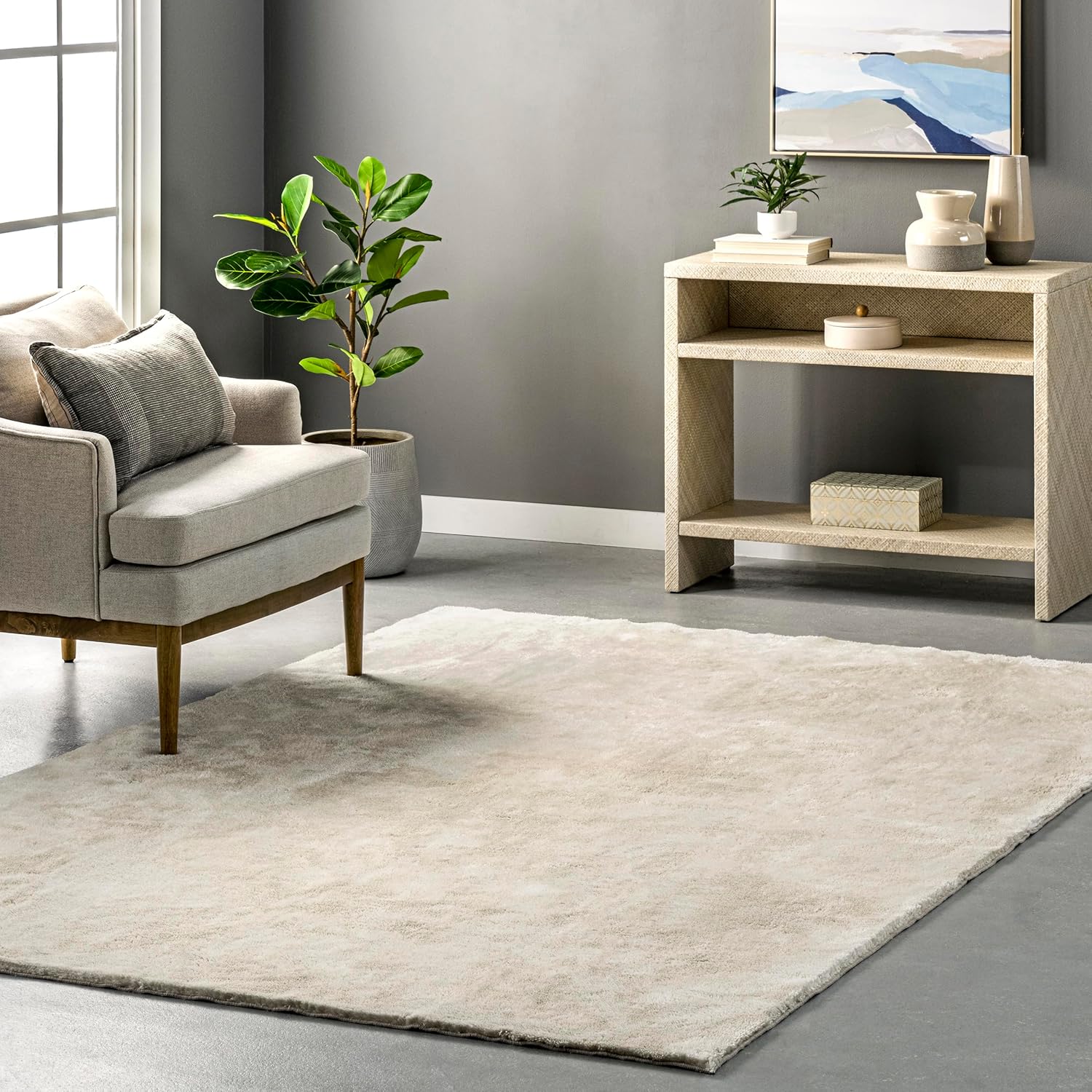
The nuLOOM washable collection solves the biggest problem most rug owners face: keeping the thing clean. These rugs handle everything your household throws at them because they’re designed to go straight into your washing machine. The polyester construction stands up to repeated washing cycles without falling apart or losing its pattern.
Available patterns range from vintage distressed medallions to modern geometric designs. The abstract options work particularly well in contemporary living rooms where you want visual interest without overwhelming the space.
At 0.25 inches thick, these sit lower than traditional rugs. This works beautifully under furniture since doors clear easily and chair legs don’t catch on edges. The trade-off is less cushioning underfoot. If you want that plush feeling, add a rug pad underneath. The low profile also means less dirt and allergen accumulation compared to high-pile alternatives.
The non-slip backing grips hardwood and tile without additional padding, though it works best on completely smooth surfaces. Textured flooring might need extra grip tape. After washing, air drying prevents shrinkage and maintains the backing’s integrity. Machine drying on low heat works in a pinch, but line drying extends longevity.
Pros:
- Machine washable for stress-free maintenance
- Low profile fits under furniture and doors
- Non-slip backing stays secure on hard floors
- Accurate color representation in photos
- Multiple size options suit various room layouts
- Stain-resistant polyester construction
Cons:
- Thinner pile requires pad for cushioning
2. Safavieh Monaco Vintage Distressed Rug
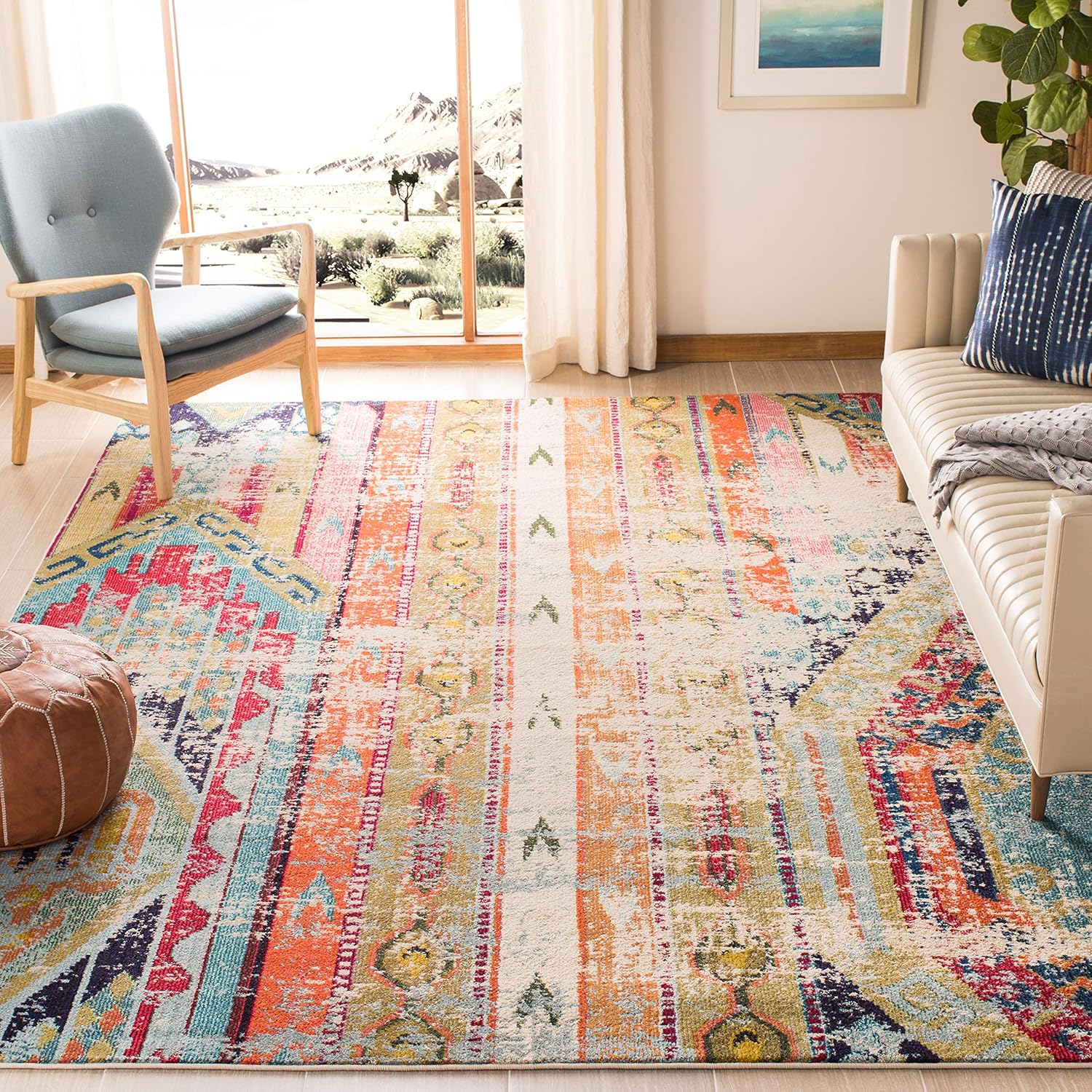
Safavieh’s Monaco collection brings authentic vintage character without the vintage price tag. The deliberately distressed patterns mimic rugs that have lived in homes for decades, complete with faded colors and worn medallion designs. The effect reads as intentional rather than cheap, which separates these from knock-offs.
The power-loomed construction uses polypropylene fibers that resist shedding remarkably well. Even in high-traffic areas, these rugs maintain their appearance without leaving fiber trails across your floor. The material also resists fading from sunlight, making them suitable for rooms with large windows.
Color options span from subdued grays and blues to vibrant pinks and oranges. The multi-colored variants layer several hues in one pattern, giving you flexibility in accent piece selection. A pink and multi version might pull gray, cream, and coral tones from your existing decor.
The low pile height measures roughly 0.25 to 0.5 inches. This keeps maintenance simple since vacuuming pulls dirt out easily rather than leaving it embedded. Spot cleaning handles most spills with a damp cloth and mild detergent. The polypropylene fibers dry quickly, preventing mold or mildew in humid climates.
Pros:
- Distressed vintage aesthetic adds character
- Polypropylene resists shedding and fading
- Multiple color palettes match various decors
- Low pile simplifies cleaning and maintenance
- Bohemian patterns create visual focal points
- Durable construction handles heavy foot traffic
Cons:
- Arrives with creases that need time to flatten
- Not machine washable despite easy-care claims
3. OLANLY Soft Shag Area Rug
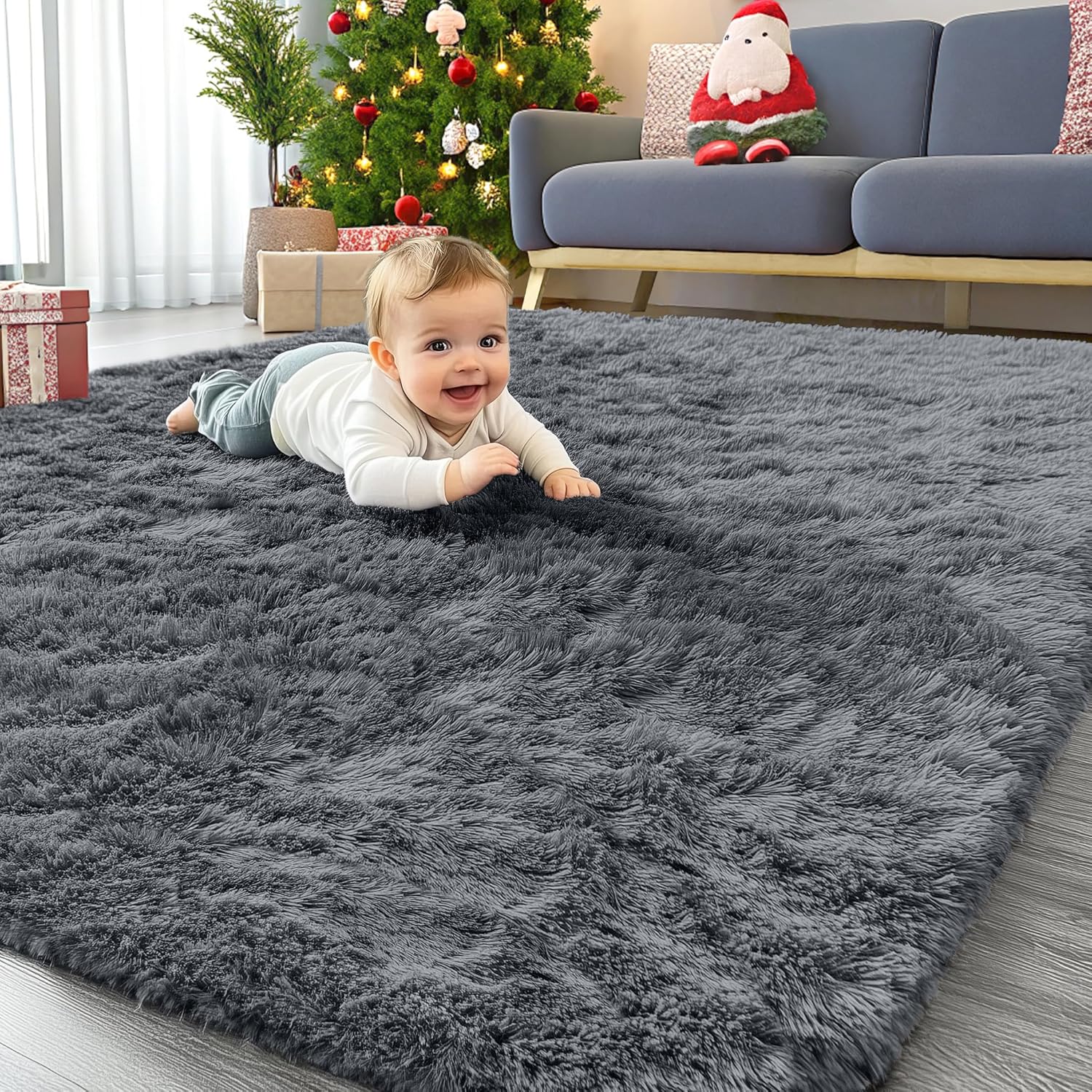
This shag rug delivers on its promise of softness. The fluffy pile measures a full 1.6 inches, creating that sink-your-toes-in feeling people associate with quality shag rugs. The polyester fibers resist matting better than cheaper alternatives, bouncing back after furniture weight or foot traffic.
The rug works particularly well in spaces where comfort matters more than formal appearance. Bedrooms, reading nooks, and casual family rooms benefit from the cozy texture. The solid color options range from neutral grays and beiges to bolder choices like navy or burgundy.
Machine washability sets this apart from traditional shag rugs. Most shag options require professional cleaning or extensive hand washing. This one fits in standard washing machines for the smaller sizes. Larger dimensions might need a commercial machine, but the option exists. Air drying maintains the fluffy texture better than heat drying.
The anti-slip bottom uses silicone dots rather than rubber backing. These grip well on hardwood, laminate, and tile. The dots don’t leave residue or damage flooring finishes. On carpet, the rug stays put without additional anchoring, though a rug pad adds extra cushioning.
Pros:
- Thick 1.6-inch pile provides luxurious softness
- Machine washable for convenient cleaning
- Silicone dot backing prevents slipping
- Polyester resists matting and maintains shape
- Affordable price point for shag construction
- Multiple color options suit different aesthetics
Cons:
- Vacuum requires gentle suction to avoid pulling fibers
4. RELEANY Washable Vintage Floral Rug
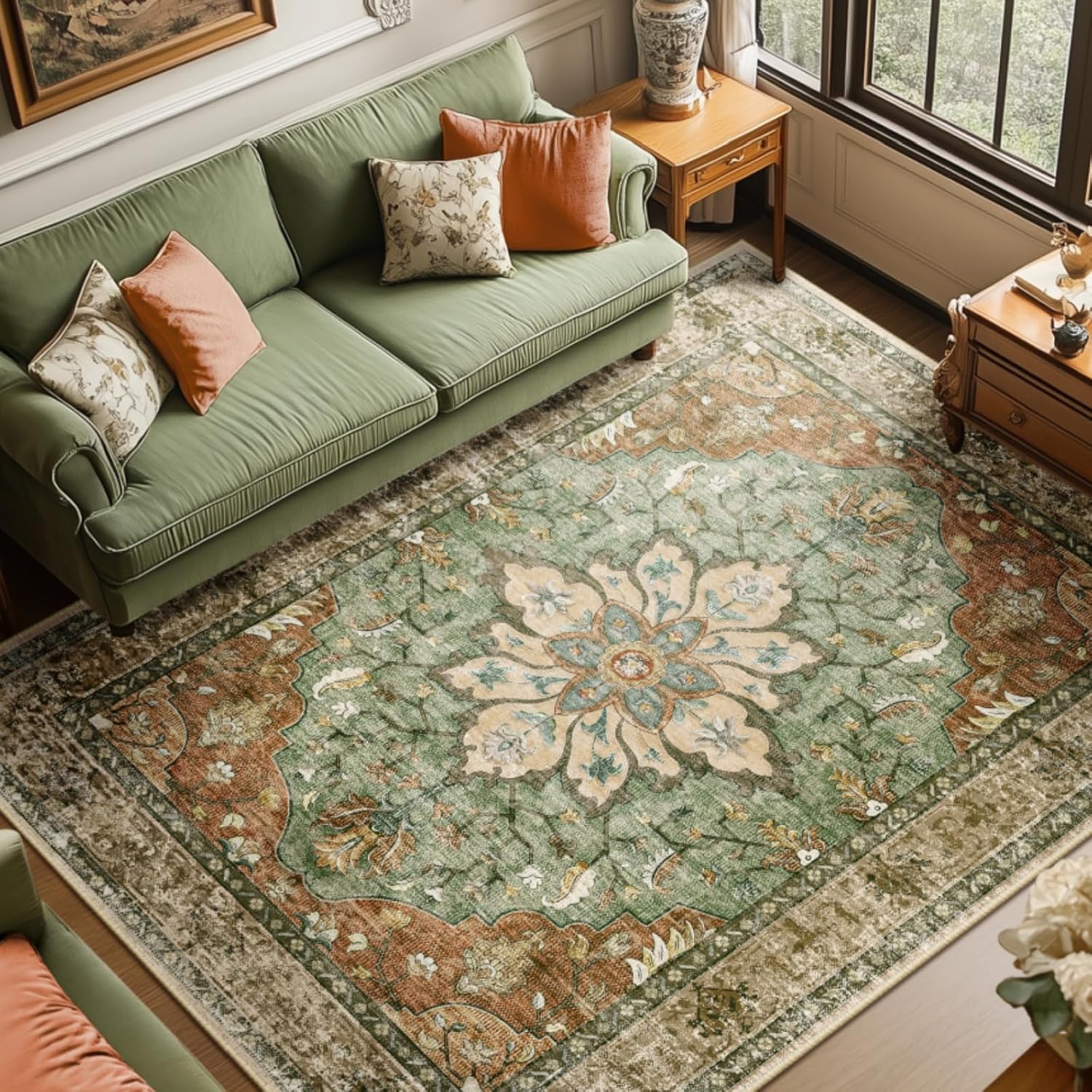
The RELEANY vintage floral design walks the line between traditional and modern successfully. The distressed floral medallion pattern nods to Persian rug styling without feeling dated. The color combinations blend warm tones like rust, orange, and brown with cooler greens and blues, creating visual interest that works in transitional spaces.
The print pattern uses digital printing technology rather than traditional weaving. This keeps costs down while maintaining pattern clarity. The colors remain vibrant through washing cycles, though following care instructions matters. Cold water wash and line drying preserve the print quality better than hot water and machine drying.
At 0.15 inches thick, this ranks among the thinnest rugs available. The ultra-low profile means it works under heavy furniture that needs to sit completely flat. Reclining chairs, sectionals, and desks benefit from this minimal height. The thinness also makes folding and storing simple if you rotate seasonal decor.
The non-slip backing uses a latex-free rubber alternative. This matters for households sensitive to latex or concerned about chemical off-gassing. The backing grips smooth floors effectively. Textured surfaces might need additional grip tape in high-traffic pathways.
Pros:
- Vintage floral pattern suits traditional decors
- Machine washable maintains convenience
- Ultra-thin profile fits under any furniture
- Latex-free backing suits sensitive households
- Vibrant colors resist fading through washes
- Foldable design simplifies storage
Cons:
- Very thin construction needs pad for comfort
5. Unique Loom Sofia Traditional Area Rug
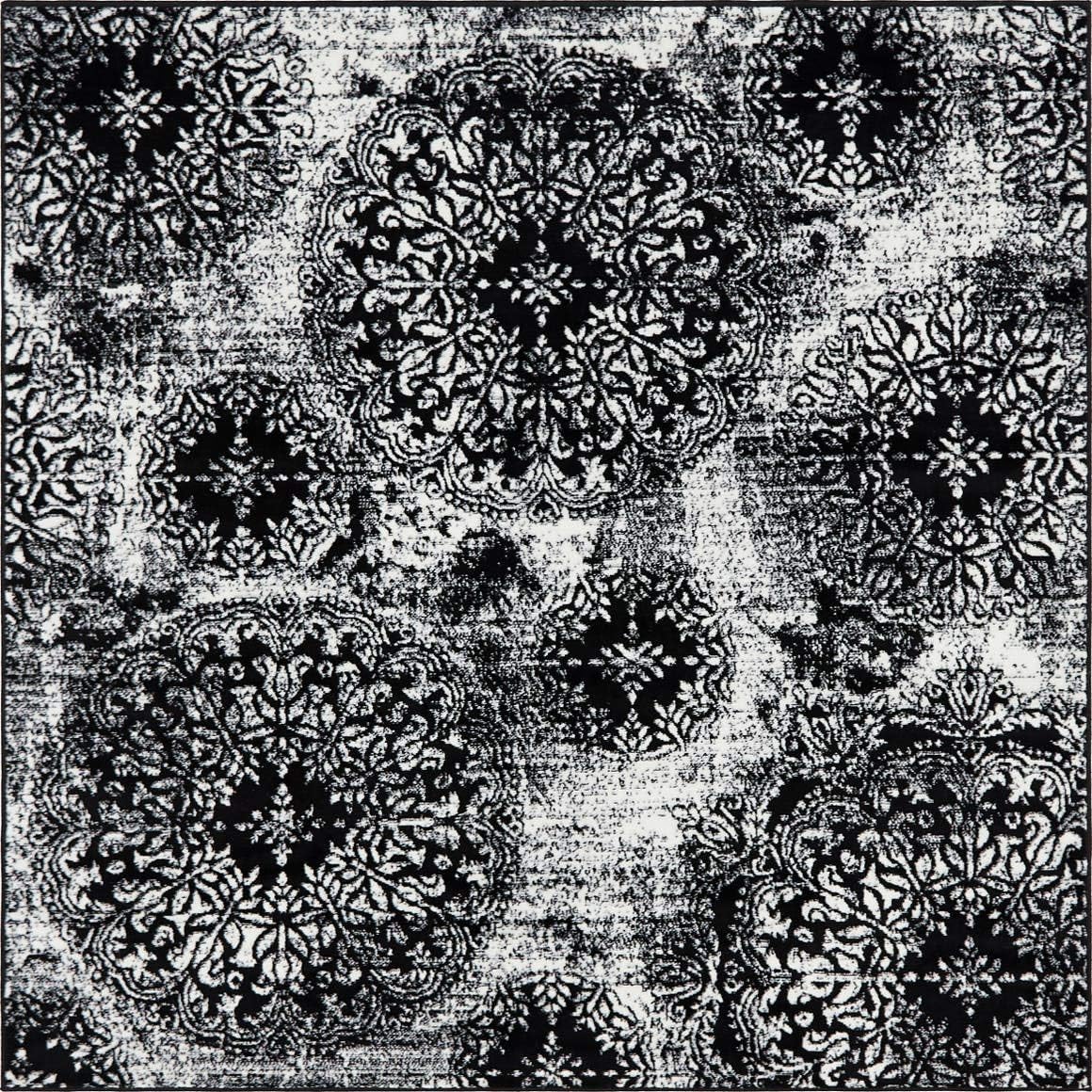
Unique Loom’s Sofia collection recreates traditional Persian patterns with modern materials. The intricate border details and central medallion designs mirror rugs that sell for thousands, but the machine-woven construction keeps prices reasonable. The patterns work in both formal dining rooms and casual living spaces.
The polypropylene construction handles the reality of modern homes. Spills wipe clean before setting in. Pet accidents clean up without permanent staining. The fibers resist absorbing odors, which matters in homes with dogs or cats. Regular vacuuming and occasional spot cleaning keep these looking fresh for years.
The pile height sits at approximately 0.4 inches, offering a middle ground between ultra-flat and plush options. This provides enough cushioning for comfortable walking while maintaining easy cleaning. The density prevents furniture legs from creating permanent indentations.
Color accuracy sometimes varies between the screen photos and actual delivery. The reds might lean more burgundy, or blues might appear darker in person. This isn’t unique to this brand, but worth noting when ordering online. Request samples if color matching matters critically for your space.
Pros:
- Traditional Persian patterns add elegance
- Polypropylene resists stains and odors
- Medium pile balances comfort and practicality
- Dense construction prevents furniture marks
- Borders and medallions create focal points
- Pet-friendly materials handle accidents
Cons:
- Colors may differ from online photos
- Edges curl slightly before rug settles
6. nuLOOM Moroccan Blythe Area Rug
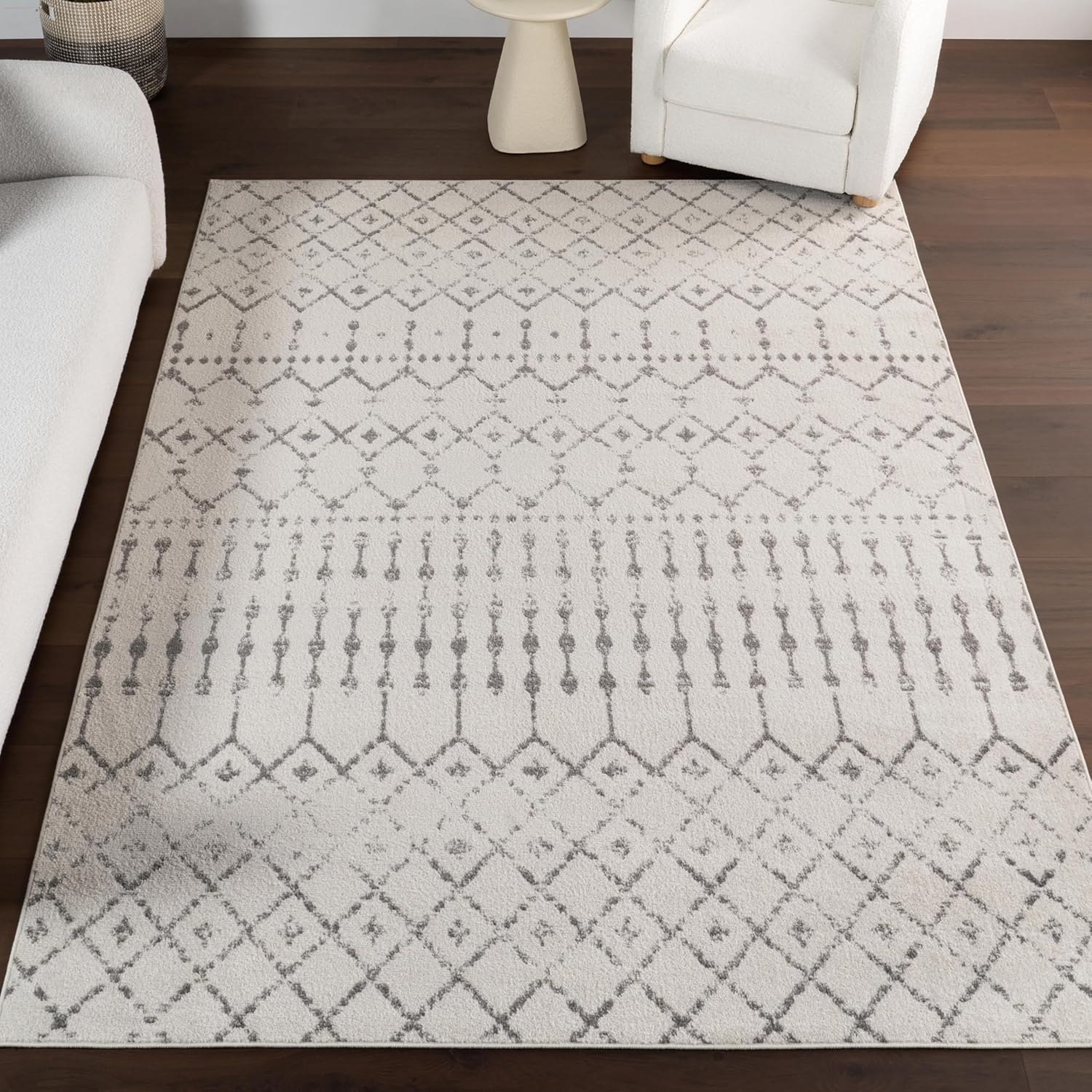
The Moroccan Blythe brings geometric trellis patterns into contemporary and transitional spaces. The repeating diamond or quatrefoil motifs add visual texture without the busyness of traditional florals. Gray and ivory color combinations create neutral foundations, while bolder options introduce color through pattern.
The low pile construction uses a mix of polypropylene and jute-style synthetic fibers. This combination mimics the texture of natural fiber rugs while maintaining easier care. The synthetic materials resist moisture damage that plagues genuine jute in humid climates or spaces prone to spills.
Size options range from small accent rugs to room-sized pieces measuring 9×12 feet. The larger sizes provide enough coverage to fit under entire furniture groupings. Proper sizing means front furniture legs sit on the rug while back legs remain on flooring, creating visual cohesion.
The edges feature serged binding rather than fringed edges. This modern finish suits contemporary furniture styles better than traditional tassels. The binding also proves more durable, resisting fraying even in doorways where foot traffic concentrates.
Pros:
- Geometric patterns suit modern aesthetics
- Polypropylene blend resists moisture damage
- Serged edges provide contemporary finish
- Neutral colors anchor various design schemes
- Multiple sizes accommodate different room dimensions
- Jute-style texture adds organic element
Cons:
- Lighter colors show dirt more readily
- Requires rug pad to prevent slipping
Buying Guide: Picking the Best Area Rugs for Living Room
1. Determine the Right Size for Your Living Room
Measure your seating area before falling in love with any pattern. A common mistake is buying too small. The rug should fit under at least the front legs of your sofa and chairs. Better yet, get it large enough to accommodate all furniture legs.
For average living rooms, an 8×10 rug works for most furniture arrangements. Smaller spaces might need a 5×7, while large open-concept areas benefit from 9×12 or larger. Leave 12 to 18 inches of bare floor between the rug edge and walls for visual breathing room.
Use painter’s tape to mark potential rug dimensions on your floor. Live with the taped outline for a few days. Does it look balanced? Can you walk around comfortably? This simple test prevents expensive sizing mistakes.
2. Choose Materials Based on Lifestyle Needs
Polypropylene dominates the affordable rug market for good reason. It resists stains, cleans easily, and handles high traffic without showing wear. Homes with kids or pets benefit from this practical choice. The synthetic fibers don’t harbor allergens like wool might.
Wool rugs offer superior softness and natural stain resistance. They cost more but last decades with proper care. The fibers naturally resist dirt and flame, making them inherently safer. Consider wool for formal living rooms with lighter traffic.
Polyester blends offer middle-ground pricing with good stain resistance. These work well for casual family rooms where comfort matters but budget constraints exist. The material holds dye well, producing vibrant colors that resist fading.
Natural fibers like jute or sisal add organic texture but require more maintenance. They stain easily and don’t handle moisture well. Reserve these for low-traffic areas or layering under more practical rugs.
3. Select Pile Height for Function and Comfort
Low pile rugs measuring under 0.5 inches suit high-traffic areas. Dirt doesn’t embed as deeply, making vacuuming more effective. These work beautifully under dining tables where chair legs slide frequently. The flat profile prevents tripping hazards in busy pathways.
Medium pile rugs between 0.5 and 0.75 inches balance comfort with practicality. They provide cushioning for bare feet while maintaining reasonable cleaning ease. Most living room rugs fall in this category.
High pile or shag rugs exceeding one inch create luxurious softness. These work best in low-traffic bedrooms or cozy reading areas. They require more cleaning effort and show vacuum tracks, but the comfort factor makes it worthwhile for the right space.
4. Consider Pattern and Color Strategy
Patterns hide dirt and wear better than solid colors. A busy Persian design camouflages the inevitable coffee spill or pet accident. Solid rugs show every mark, requiring more frequent cleaning to maintain appearance.
Light colors make rooms feel more spacious and airy. Cream, beige, and light gray reflect light around the space. The trade-off is visible dirt. If your household runs messy, choose darker tones or patterned options.
Bold patterns work when your walls and furniture lean neutral. Let the rug provide the pop of color and visual interest. Conversely, if your sofa makes a statement, choose a subtle rug that grounds without competing.
5. Understand Washability Features
Machine washable rugs save money on professional cleaning. Check the size limits on your washing machine before assuming any rug fits. An 8×10 exceeds most home machine capacities. Smaller sizes up to 5×7 usually work in standard machines.
Stain-resistant treatments help, but they’re not magic. These coatings make spills bead up for easier cleanup rather than preventing stains entirely. Blot spills immediately even on treated rugs.
Some rugs claim washability but arrive with tags saying “spot clean only.” Read actual care labels upon delivery, not just marketing descriptions. Return options matter if the care requirements don’t match your expectations.
6. Plan for Proper Rug Pads
Rug pads serve multiple purposes beyond preventing slipping. They add cushioning, protect flooring from rug backing, and extend rug life by reducing wear. The extra layer also makes vacuuming more effective by creating firmness underneath.
For hardwood floors, choose felt pads with minimal rubber. Too much rubber can damage wood finishes over time. Natural rubber pads work better than synthetic versions for both grip and floor safety.
Tile and laminate floors handle rubber pads well. These provide maximum grip to keep rugs stationary. In high-traffic areas, this stability prevents tripping hazards from bunched or shifted rugs.
Layering Rugs for Added Dimension
Layering creates designer-level looks without designer budgets. Start with a large, neutral base rug like jute or sisal. Add a smaller, patterned rug on top, centering it in the seating area. This combination adds texture and visual interest while protecting the decorative top rug from full traffic exposure.
The bottom layer should extend beyond the top by at least 6 inches on all sides. This creates intentional framing rather than accidental overlap. The contrasting textures between layers add depth to flat spaces.
Natural fiber bases pair beautifully with vintage Persian or modern geometric tops. The organic texture grounds bolder patterns. Alternatively, use a solid rug as the base and pattern on top for controlled color introduction.
Maintenance Tips for Long-Lasting Rugs
Vacuum high-traffic rugs twice weekly using appropriate suction settings. Strong suction pulls fibers loose on delicate rugs. Lower settings preserve pile integrity while still removing surface dirt. Rotate rugs 180 degrees every few months to distribute wear evenly.
Address spills immediately by blotting, never rubbing. Rubbing pushes stains deeper into fibers. Work from outside edges toward the center to prevent spreading. Use cold water for most spills; hot water sets protein-based stains permanently.
Professional cleaning every 12 to 18 months extends rug life significantly. Professionals extract deep-seated dirt that home vacuums miss. This deep cleaning also removes allergens and refreshes colors. Budget for this maintenance cost when calculating total rug investment.
Frequently Asked Questions
1. What size area rug works best for living room layouts?
An 8×10 rug suits most standard living rooms, fitting under furniture front legs while leaving floor space exposed around edges. Measure your seating arrangement before buying, ensuring the rug extends at least 6 inches beyond the coffee table on all sides. Larger rooms need 9×12 or bigger to maintain proper proportions, while small spaces work better with 5×7 options.
2. How do I choose between patterned and solid area rugs?
Select patterned rugs when your walls and furniture are mostly neutral, using the rug to introduce color and visual interest. Choose solid rugs when your space already features busy patterns in upholstery or artwork. Patterned rugs hide wear and stains better, making them practical for high-traffic family rooms. Solid rugs create calm, minimalist aesthetics but require more frequent cleaning.
3. Can I machine wash a large living room area rug?
Most home washing machines accommodate rugs up to 5×7 feet, depending on pile thickness and material weight. Larger rugs require laundromat commercial machines or professional cleaning services. Always check care labels rather than relying on product descriptions, as actual washing instructions sometimes differ from marketing claims. Line drying prevents shrinkage better than machine drying for washable options.
4. What material works best for living room rugs with pets?
Polypropylene offers the best combination of durability, stain resistance, and affordability for pet owners. The synthetic fibers resist absorbing odors and clean easily with standard carpet cleaners. Indoor-outdoor rugs made from polypropylene handle accidents particularly well since they’re designed for moisture exposure. Avoid natural fibers like wool or jute in pet-heavy households as they absorb odors and stain permanently.
5. Do I really need a rug pad under my area rug?
Yes, rug pads serve essential functions beyond preventing slipping. They protect flooring from rug backing, add cushioning for comfort, extend rug life by reducing wear, and make vacuuming more effective. For hardwood floors, felt pads with minimal rubber prevent finish damage. For tile or laminate, rubber pads provide maximum grip. The small additional cost pays off in protected flooring and longer rug lifespan.
6. How do I keep my area rug from sliding on hardwood floors?
Purchase a rug pad specifically designed for hardwood, using felt with natural rubber grips rather than synthetic rubber that damages finishes. For rugs with built-in non-slip backing, ensure your floor is completely clean before placement, as dust prevents adhesion. Alternatively, apply rug tape strips to corners and edges, though pads offer more comprehensive stability and floor protection.
7. What pile height provides the best comfort for bare feet?
Medium pile rugs between 0.5 and 0.75 inches offer comfortable cushioning while maintaining practical cleaning ease. Shag rugs exceeding one inch feel more luxurious but collect more dirt and show vacuum marks. Low pile under 0.5 inches works better for high-traffic areas but feels firmer underfoot. Add quality rug pads under any pile height to increase cushioning without sacrificing the rug’s designed characteristics.
8. How often should I vacuum my living room area rug?
High-traffic living room rugs need vacuuming twice weekly to prevent dirt from settling deep into fibers. Low-traffic areas can stretch to once weekly. Use the appropriate suction setting for your rug’s pile height—lower suction for delicate or high-pile rugs, stronger suction for low-pile options. Vacuum in multiple directions to lift embedded dirt effectively, and skip the beater bar on delicate natural fibers.
9. Can dark area rugs make a small living room feel cramped?
Dark rugs can ground a space beautifully when balanced with lighter walls and furniture. In small rooms, use dark rugs with clear definition between rug and floor to maintain visual boundaries. Avoid oversized dark rugs that bleed into wall space, which does create cramped feelings. Alternatively, choose dark rugs with lighter pattern elements to introduce depth without overwhelming smaller square footage.
10. What’s the best way to remove pet odors from area rugs?
Enzyme cleaners specifically designed for pet odors work more effectively than general carpet cleaners. Spray the affected area thoroughly, let sit for the recommended time, then blot excess moisture. For machine-washable rugs, add white vinegar to the rinse cycle to neutralize odors. Baking soda sprinkled on dry rugs and left overnight before vacuuming also absorbs lingering smells. Persistent odors may require professional cleaning with specialized equipment.
Conclusion
The best area rugs for living room spaces combines practical features with aesthetic appeal that matches your personal style. Whether you prioritize easy washing, vintage character, or plush comfort, the right rug exists for your needs and budget.
Take time measuring your space accurately and considering your household’s reality. A beautiful rug that stains permanently after the first spill serves nobody well. Match the material and maintenance requirements to your actual lifestyle rather than an idealized version. Your living room will look better and function smarter with a rug that truly works for how you live.