Books deserve better than being stacked on the floor or hidden in closets. The right bookshelf transforms your collection into a display while keeping living rooms organized and functional.
But buying bookshelves means navigating endless options in sizes, styles, and materials. The wrong choice wastes space or clashes with your decor. Let me show you shelving that actually works for real living rooms and book collections.
Best Bookshelves for Living Room(Product Reviews)
1. Tribesigns 5-Tier Industrial Bookshelf
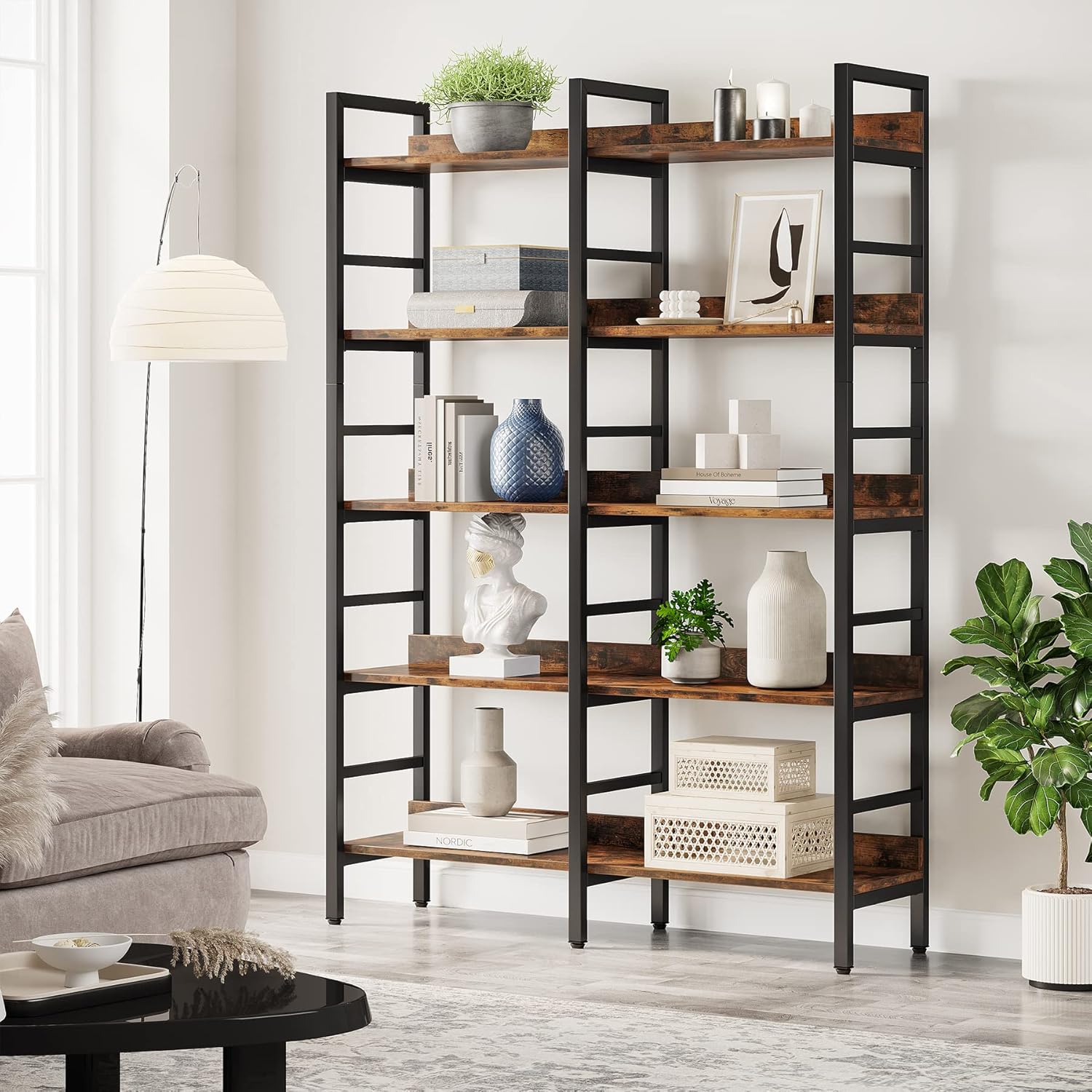
This sturdy bookshelf combines rustic wood shelves with a black metal frame. The industrial aesthetic works beautifully in modern, loft, or eclectic living rooms. Five spacious shelves provide ample storage for books and decorative objects.
The open back design allows light through and makes the unit feel less heavy in your space. Wall anchors are included for stability and safety. Each shelf holds up to 220 pounds total, which accommodates substantial book collections.
Assembly takes about 30 minutes with clear instructions and all necessary hardware. The rustic brown wood finish has nice grain texture. The metal frame is powder-coated for durability and corrosion resistance.
Pros:
- Industrial wood and metal combination
- Five spacious shelves for storage
- Open back design feels lighter
- Holds up to 220 pounds total
- Includes wall anchors for safety
- Powder-coated metal resists wear
- Relatively quick assembly
Cons:
- Industrial style not suited to all decor
2. IKEA Billy Bookcase
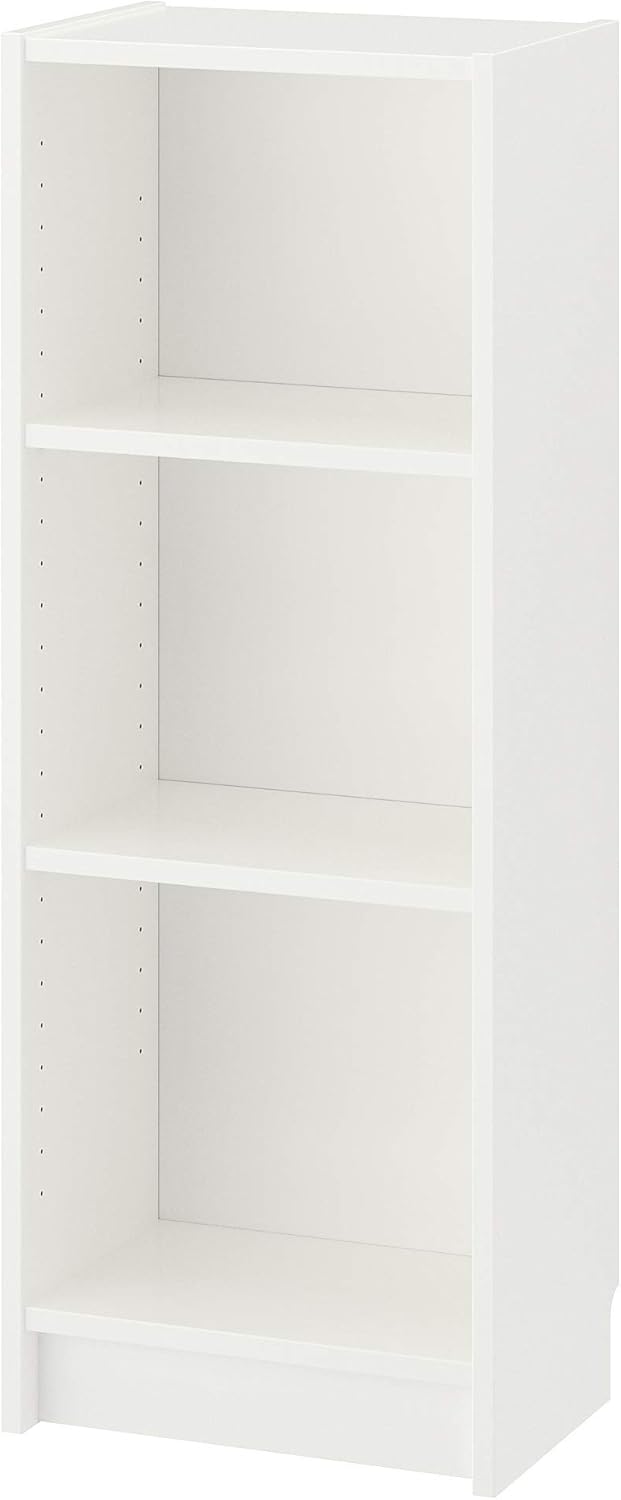
This iconic bookshelf has earned its place in millions of homes through reliable function and affordable pricing. The tall, narrow profile fits well in various living room configurations. Six adjustable shelves let you customize spacing for different items.
The simple Scandinavian design blends into most decor styles without demanding attention. Available in multiple finishes including white, black-brown, and natural wood. Additional units can be placed side-by-side for library wall effects.
The particle board construction keeps weight and cost down while providing adequate strength. Each shelf holds up to 30 pounds when properly supported. Glass doors are available separately if you want enclosed storage.
Pros:
- Affordable and widely available
- Six adjustable shelves
- Tall narrow profile saves floor space
- Multiple finish options
- Can combine multiple units
- Classic Scandinavian design
- Optional glass doors available
Cons:
- Particle board less durable than solid wood
3. Sauder Barrister Lane Bookcase
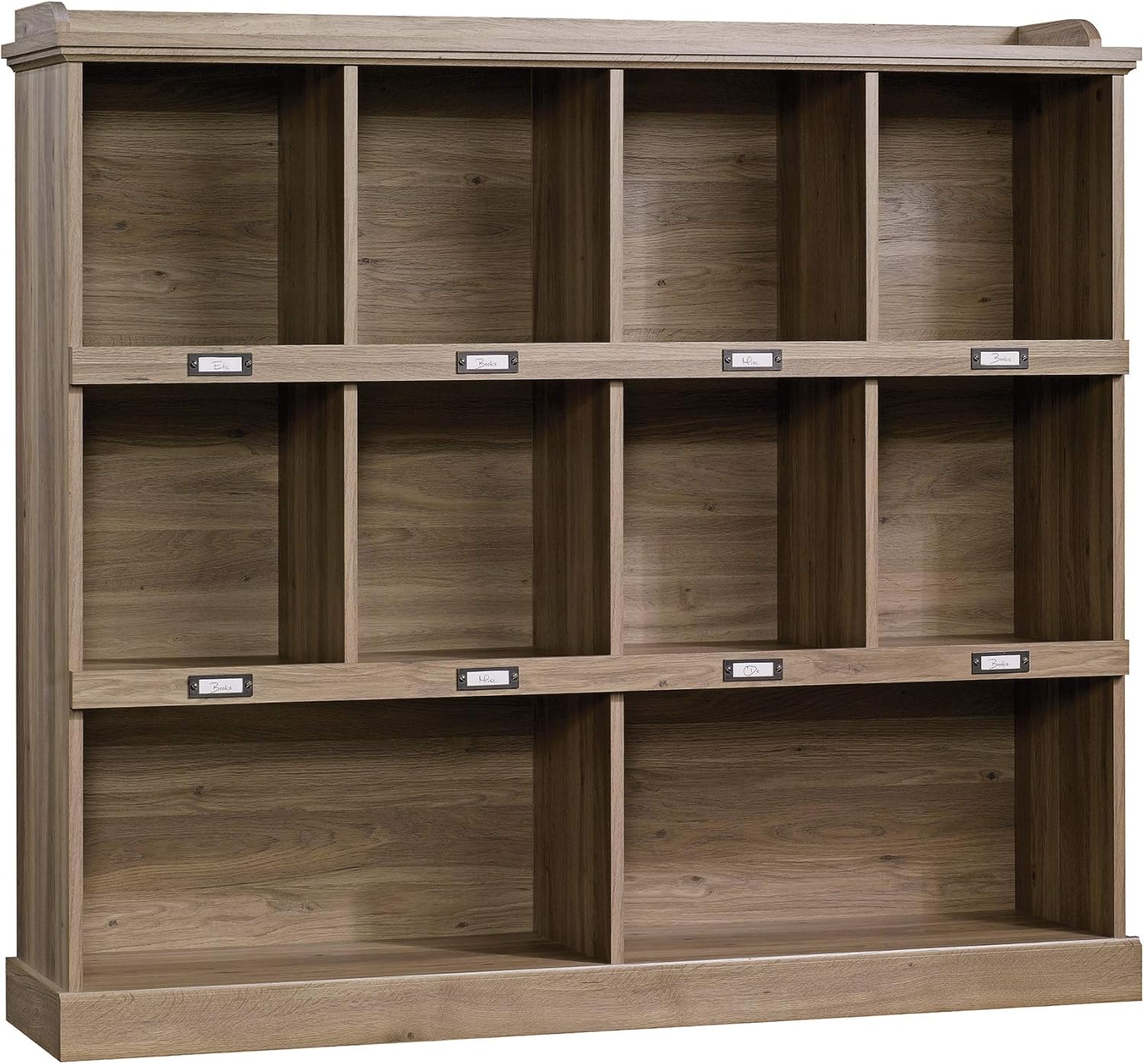
This traditional bookshelf brings warm wood styling to living rooms. The rich finish and quality construction create furniture-grade appearance. Five shelves provide generous storage with classic styling that never goes out of fashion.
The enclosed back panel adds stability and finished appearance. Adjustable shelving accommodates items of various heights from books to decorative objects. The base and top have more ornate detailing than basic shelves.
Assembly requires time and patience but results in sturdy, stable furniture. The engineered wood with wood veneer provides durability and attractive finish. This bookshelf suits traditional, transitional, or farmhouse interiors.
Pros:
- Traditional styling with quality finish
- Five adjustable shelves
- Enclosed back for finished look
- Ornate base and top details
- Furniture-grade appearance
- Sturdy when assembled
- Works in classic interiors
Cons:
- Assembly is time-intensive
4. Nathan James Theo 5-Shelf Open Bookcase
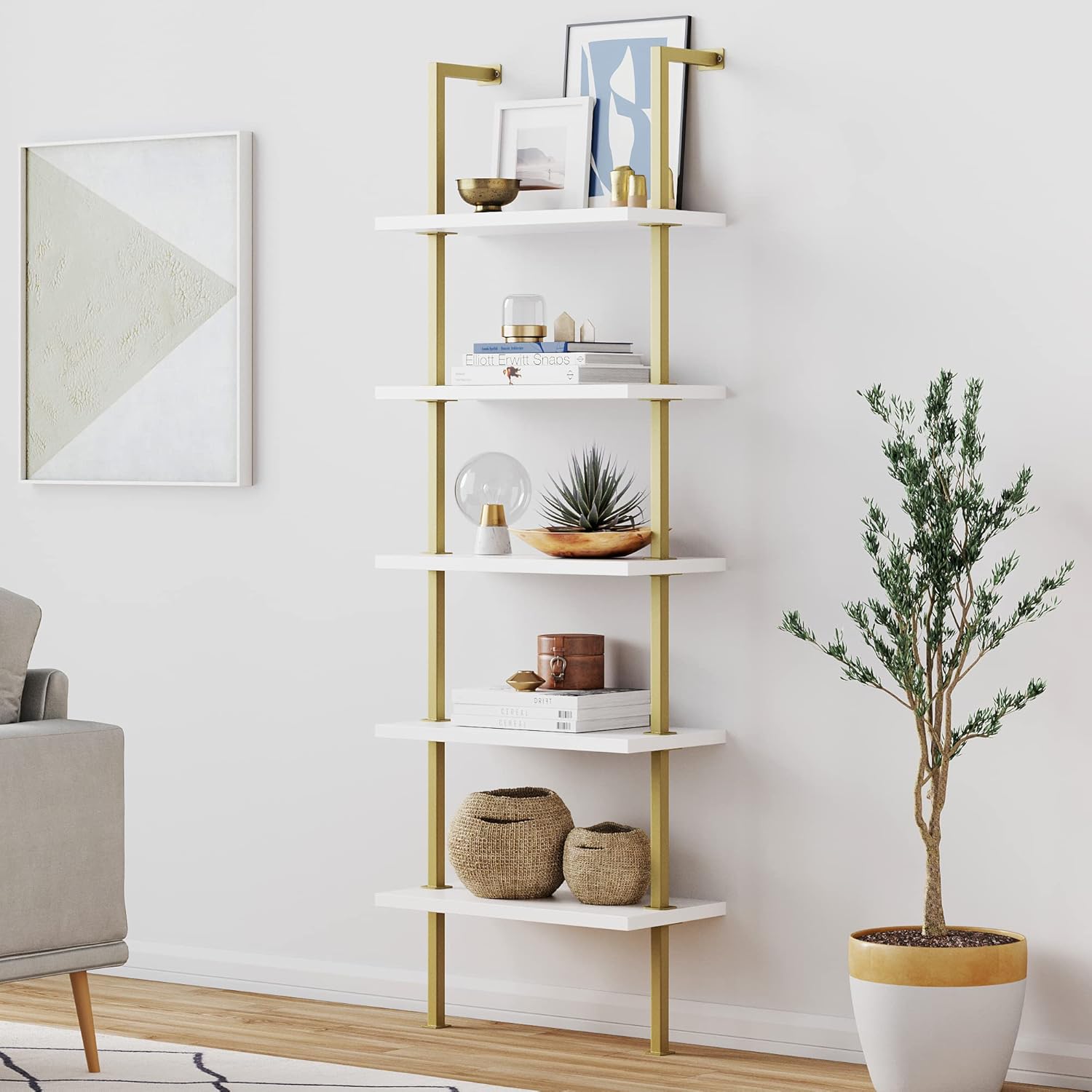
This mid-century modern bookshelf features clean lines with angled metal legs. The walnut finish and gold-tone metal create warm, sophisticated combinations. Five open shelves display books and objects beautifully.
The ladder-style leaning design is both functional and decorative. The angle adds architectural interest while saving floor space compared to straight bookcases. The open design keeps living rooms feeling airy.
Construction is solid despite the delicate appearance. Each shelf holds up to 30 pounds. The unit is designed to lean against walls but includes anti-tip hardware for safety. Assembly is straightforward with minimal parts.
Pros:
- Mid-century modern aesthetic
- Walnut and gold metal combination
- Space-saving leaning design
- Adds architectural interest
- Open shelves feel airy
- Solid despite delicate look
- Simple assembly
Cons:
- Leaning design requires wall space
5. Walker Edison Modern Bookshelf Tower
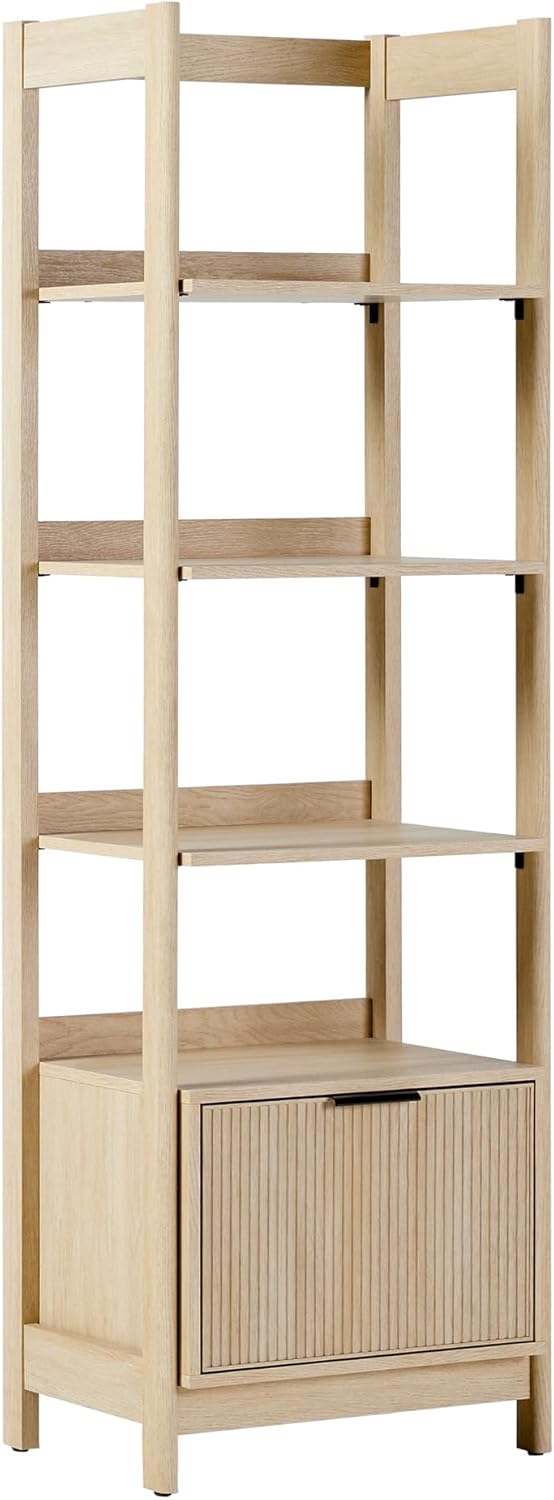
This tall, slim tower maximizes vertical space without large footprints. Four open shelves display books and decor efficiently. The X-frame sides add visual interest and structural support.
The rustic oak finish brings warmth while the metal frame adds industrial edge. This combination suits transitional spaces bridging traditional and modern styles. The narrow width fits in tight spaces like room ends or beside furniture.
Construction is solid with metal frame providing excellent stability. Each shelf adjusts to accommodate items of various heights. The tower design draws eyes upward making rooms feel taller.
Pros:
- Tall slim profile saves floor space
- X-frame adds visual interest and stability
- Rustic oak and metal combination
- Adjustable shelf heights
- Fits in tight spaces
- Makes rooms feel taller
- Solid construction
Cons:
- Narrow width limits larger display items
6. Furinno Jaya Simple Home Bookcase
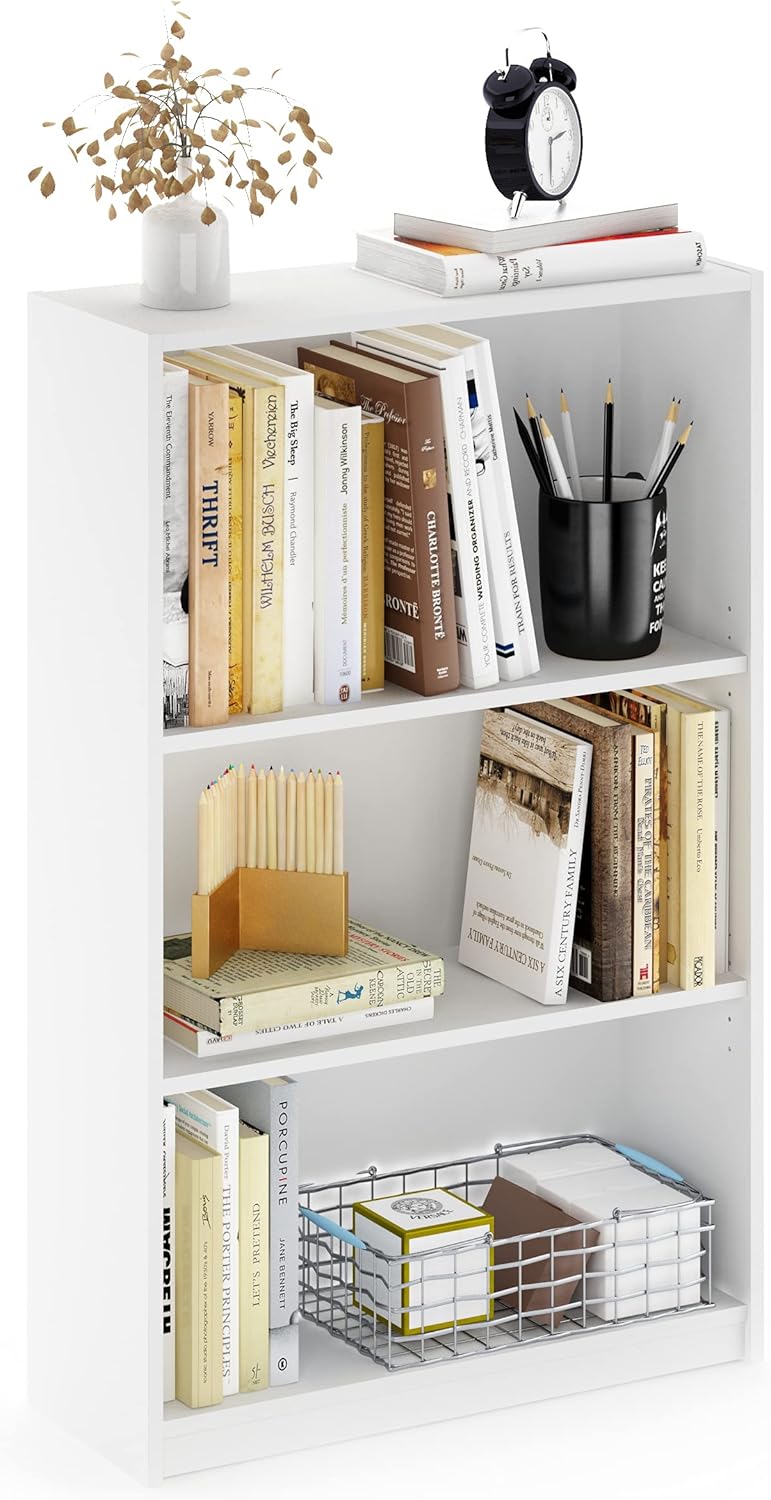
This budget-friendly bookshelf delivers function without frills. Five open shelves provide straightforward book storage. The compact design fits in apartments, small living rooms, or as supplemental storage.
The espresso or French oak finish options coordinate with existing furniture. The lightweight construction makes moving and assembly easy. Rounded edges provide safety in homes with children.
The simple design works when you need basic storage without decorative elements. Engineered wood construction keeps costs low while providing adequate durability. This bookshelf suits temporary situations, rentals, or tight budgets.
Pros:
- Very budget-friendly pricing
- Five open shelves
- Compact size for small spaces
- Lightweight and easy to move
- Rounded edges for safety
- Simple assembly
- Basic functional storage
Cons:
- Basic construction and simple design
- Lower weight capacity than premium options
Buying Guide for the Best Bookshelves for Living Room
1. Assessing Your Storage Needs
Calculate how many books you actually own before buying shelves. Stack books to measure linear feet needed. Add twenty percent for future growth and decorative object space. This prevents buying insufficient shelving.
Consider what besides books you’ll store. Magazine collections, decorative objects, framed photos, and plants all require shelf space. Deep shelves accommodate larger items while shallow shelves suit paperbacks and small objects.
Think vertically when space is limited. Tall bookcases maximize storage without consuming excessive floor space. Wide, low bookcases work better in rooms with large wall expanses or under windows.
2. Shelf Height and Spacing Options
Adjustable shelves provide maximum versatility for collections with various-sized books. Fixed shelves work fine if your collection is relatively uniform in size. Standard shelf spacing of 11-12 inches accommodates most books.
Tall shelves suit oversized art books, large format photography collections, or decorative objects. Short shelves waste space with standard-height books but work for paperbacks or small volumes. Mixed shelf heights maximize versatility.
The top shelf should be reachable without step stools for practical daily access. Very tall bookcases need lower shelves for frequently accessed books and higher shelves for occasional-use items or pure display.
3. Material Quality and Durability
Solid wood bookshelves last decades and support substantial weight. They’re investments that become furniture pieces rather than temporary storage. Oak, pine, and walnut are common solid wood choices.
Engineered wood like plywood or MDF offers budget-friendly alternatives with good stability. Quality engineered wood with veneer can look impressive and lasts years. Particle board is the least durable but most affordable option.
Metal and wood combinations provide industrial aesthetics with excellent strength. Metal frames support heavier loads than all-wood construction. The mixed materials create visual interest while maximizing functionality.
4. Style Integration with Living Room Decor
Bookshelf style should complement your existing furniture without necessarily matching exactly. Contrasting materials add interest. A metal and wood bookshelf beside a fabric sofa creates nice textural variety.
Modern living rooms suit clean-lined bookcases in simple designs. Traditional spaces work with ornate details and classic finishes. Mid-century modern rooms pair perfectly with tapered legs and warm wood tones.
Open versus closed storage affects room atmosphere. Open shelving feels airy and displays collections proudly. Closed cabinets hide clutter but can make spaces feel heavier. Mixed designs offer both display and concealment.
5. Dimensions and Room Proportions
Measure your available wall space carefully before shopping. Account for baseboards, door swings, and walkway clearances. A bookshelf that fits dimensionally but blocks traffic becomes a constant annoyance.
Bookshelf height should relate to ceiling height proportionally. Very tall bookcases in rooms with low ceilings feel oppressive. Short bookcases in rooms with high ceilings waste vertical space and look insignificant.
Consider sight lines from different positions in your living room. Bookcases that block windows or views from seating areas frustrate daily living. Plan placement thoughtfully for both storage and livability.
6. Weight Capacity and Structural Integrity
Check weight capacity per shelf before loading books. Most engineered wood shelves handle 25-30 pounds per shelf safely. Solid wood and metal combinations support significantly more weight.
Books are heavy. A shelf full of hardcovers can easily exceed cheap bookcase capacities. Wall anchoring provides additional stability and safety. Always use included anti-tip hardware, especially in homes with children or pets.
Sagging shelves indicate overloading or poor construction. Add mid-span supports to prevent sagging on long shelves. Consider bookcase depth too—deeper shelves hold more books but require stronger construction to prevent bowing.
Organizing and Styling Your Bookshelf
Organize books in ways that make sense for your use. Alphabetical by author works for large collections you reference often. Genre or topic organization suits browsing. Color-coordinated spines create rainbow effects that photograph beautifully but sacrifice practicality.
Mix vertical and horizontal book stacks for visual interest. Stack horizontally when books are too tall for shelf heights or to create surfaces for small decorative objects. Vary spine-out and cover-out display.
Incorporate decorative objects between books to break up spines. Plants, photos, small sculptures, and candles add personality. The rule of thirds applies—roughly two-thirds books, one-third decorative objects creates balanced appearances.
Leave some shelves with breathing room rather than cramming every inch full. Negative space prevents claustrophobic feelings and allows displays to breathe. Dense packing makes finding specific books difficult and looks cluttered.
Conclusion
The right bookshelf makes your book collection accessible and beautiful while organizing your living room. Whether you choose industrial metal combinations, classic wood designs, or modern cube storage, quality shelving enhances daily living.
Measure carefully and choose capacity that exceeds your current needs slightly. Invest in proper anchoring for safety. Your books deserve display space that showcases them beautifully while keeping your living room functional and stylish.
Frequently Asked Questions
1. How many books can a standard bookshelf hold?
Capacity varies dramatically by shelf dimensions and book sizes. A standard five-shelf bookcase approximately 30 inches wide holds 200-300 average-sized books. Deeper shelves or double-stacking increases capacity significantly.
Weight capacity limits book storage more than physical space often. Most engineered wood shelves safely hold 25-30 pounds per shelf. A shelf full of heavy hardcovers can exceed this quickly. Check manufacturer specifications before loading.
2. Should I anchor my bookshelf to the wall?
Yes, absolutely anchor bookcases to walls especially if you have children, pets, or live in earthquake-prone areas. Tall, narrow bookcases are particularly prone to tipping when fully loaded. Most modern bookcases include anti-tip hardware.
Wall anchoring is essential for safety and prevents tragic accidents. Even if you don’t have children, fully-loaded bookcases are top-heavy and can tip. Use appropriate anchors for your wall type and always locate studs when possible.
3. How do I prevent shelves from sagging?
Avoid overloading shelves beyond their weight capacity. Distribute weight evenly across shelf length rather than concentrating books in one area. Add mid-span supports under long shelves prone to sagging.
Quality construction resists sagging better than cheap materials. Solid wood sags less than particle board. Thicker shelves support more weight without bowing. If shelves are already sagging, remove some weight and add supports.
4. What’s the standard height for bookshelves?
Common bookcase heights range from 30 inches for low bookcases to 80+ inches for tall library-style units. Most floor-to-ceiling bookcases are 70-80 inches tall. The best height depends on your ceiling height and storage needs.
Consider reach when choosing height. The highest shelf should be accessible without step stools for practical daily use. Very tall bookcases work best with less-frequently-accessed items on top shelves.
5. Can I use bookshelves as room dividers?
Yes, open-back bookcases work wonderfully as room dividers. They define spaces while allowing light through and providing storage from both sides. Choose sturdy bookcases designed for this purpose rather than wall-leaning designs.
Position bookcases perpendicular to walls to create separate zones. The open shelving maintains sightlines while psychologically dividing space. Style both sides thoughtfully since the bookcase becomes a focal point from multiple angles.
6. How do I arrange books on shelves attractively?
Mix vertical and horizontal orientations for visual interest. Group books by color for striking rainbow effects or by size for neat appearances. Intersperse decorative objects between book groups to break up spines.
Vary shelf fullness—some shelves packed, others sparse creates rhythm. Use bookends for partially filled shelves. Face some books outward to display beautiful covers. Layer smaller items in front of books for depth.
7. Are expensive bookshelves worth the investment?
Quality bookshelves last decades while cheap options sag, break, or fall apart within years. If you have substantial book collections or plan to use the bookshelf long-term, investment in quality construction pays off.
Consider cost per year of use. A $400 bookshelf lasting twenty years costs $20 annually. A $100 bookshelf failing after three years costs $33 annually. Quality construction, solid materials, and classic styling justify higher prices for long-term use.