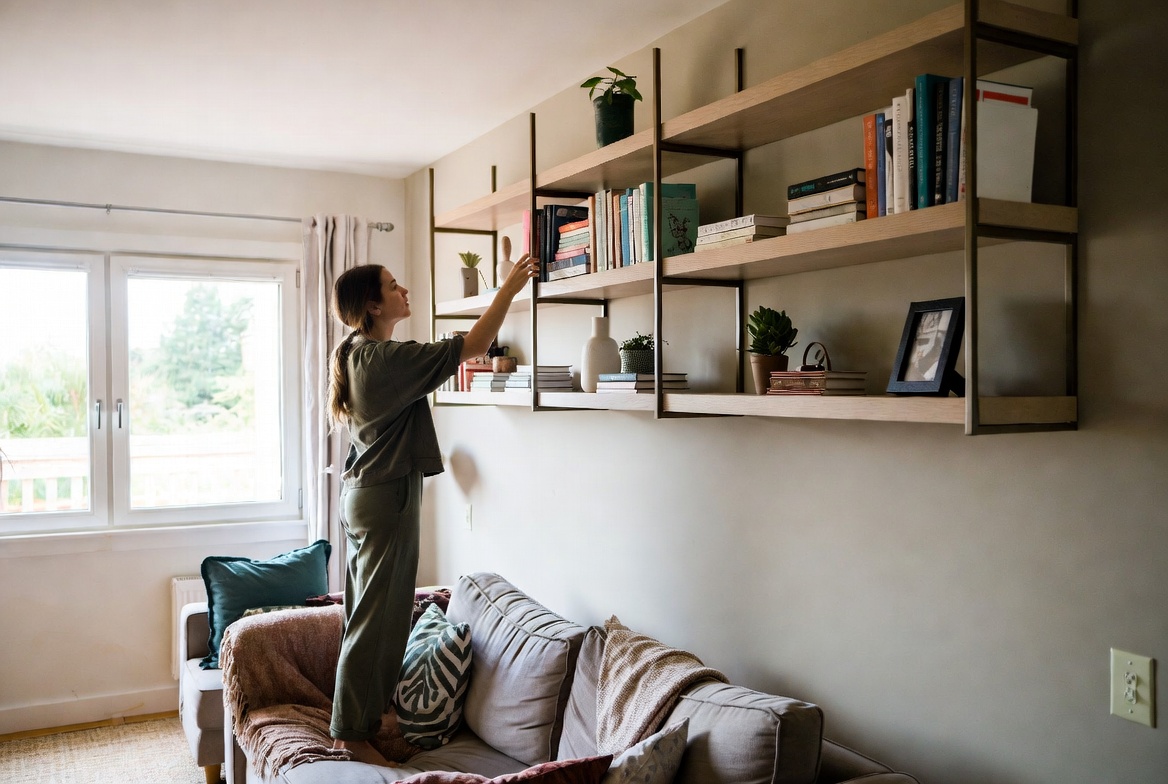
Dead wall space feels like wasted potential. Floating shelves transform those blank areas into functional display zones that add character and storage to your living room.
The best floating shelves for living room should blend seamlessly with your decor while providing practical storage. They hold books, plants, photos, and collectibles without the bulk of traditional furniture.
Let me show you options that actually stay mounted and look great doing it.
Top Floating Shelves Worth Considering
- Best Overall: WELLAND Live Edge Floating Shelves
- Best Modern Option: Love-KANKEI Floating Shelves Set of 3
- Best Budget Pick: BAMFOX Floating Shelves Wall Mounted Set of 2
Product Reviews
1. WELLAND Live Edge Floating Shelves
These solid wood shelves bring natural beauty to your living room with authentic live edge detailing. Each shelf is made from real paulownia wood, so every piece has unique grain patterns and edge contours. The wood finish is rich and warm, adding organic texture to any wall.
The invisible mounting system creates that true floating effect. Heavy-duty brackets support up to 17 pounds per shelf, which handles most decor items easily. Installation hardware comes included, though you’ll want to hit studs for maximum weight capacity.
The natural edge gives these shelves a rustic yet refined look. They work beautifully in modern farmhouse, bohemian, or contemporary spaces. The wood is finished and ready to use right out of the box.
Pros:
- Authentic live edge creates unique character
- Solid paulownia wood construction
- Holds up to 17 pounds per shelf
- Invisible mounting for clean look
- Pre-finished and ready to install
- Works with multiple decor styles
Cons:
- Natural variations mean shelves won’t be identical
2. Love-KANKEI Floating Shelves Set of 3
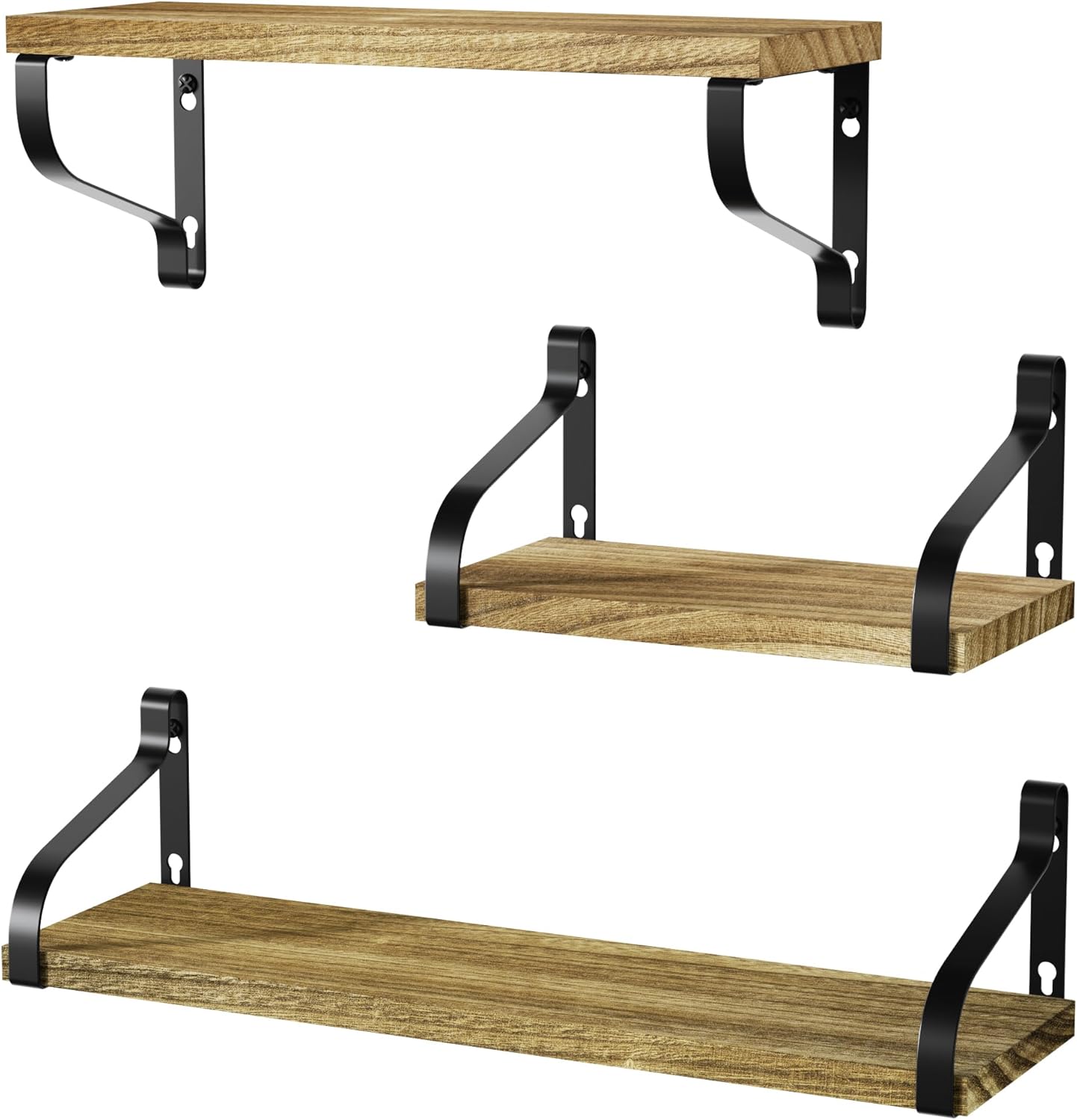
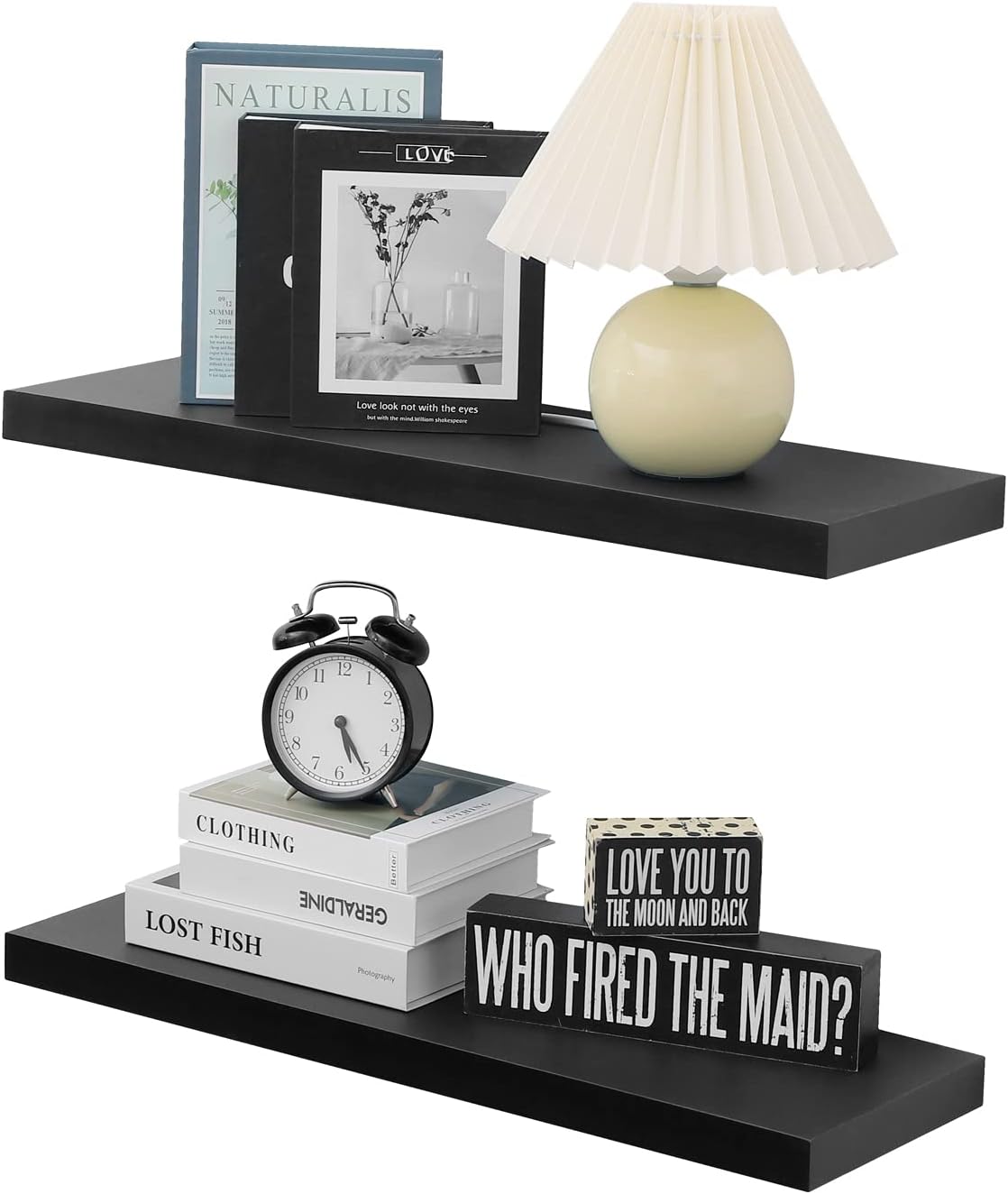
This three-piece set offers versatility with shelves in different sizes that you can arrange however you want. The carbonized black finish has a sleek, modern look that complements contemporary living rooms. Each shelf features a subtle lip that prevents items from sliding off.
The metal brackets are industrial-strength and mount directly to wall studs. The set includes all mounting hardware and clear instructions. Each shelf can hold up to 17 pounds when properly installed.
The varying lengths let you create interesting asymmetrical arrangements. You can stack them vertically, stagger them across a wall, or spread them throughout the room. This flexibility makes them work in spaces of any size.
Pros:
- Three different sizes for flexible arranging
- Sleek carbonized black finish
- Lip edge prevents items from falling
- Industrial-strength mounting
- All hardware included
- Creates visual interest with varied lengths
Cons:
- Dark finish shows dust more easily
3. BAMFOX Floating Shelves Wall Mounted Set of 2
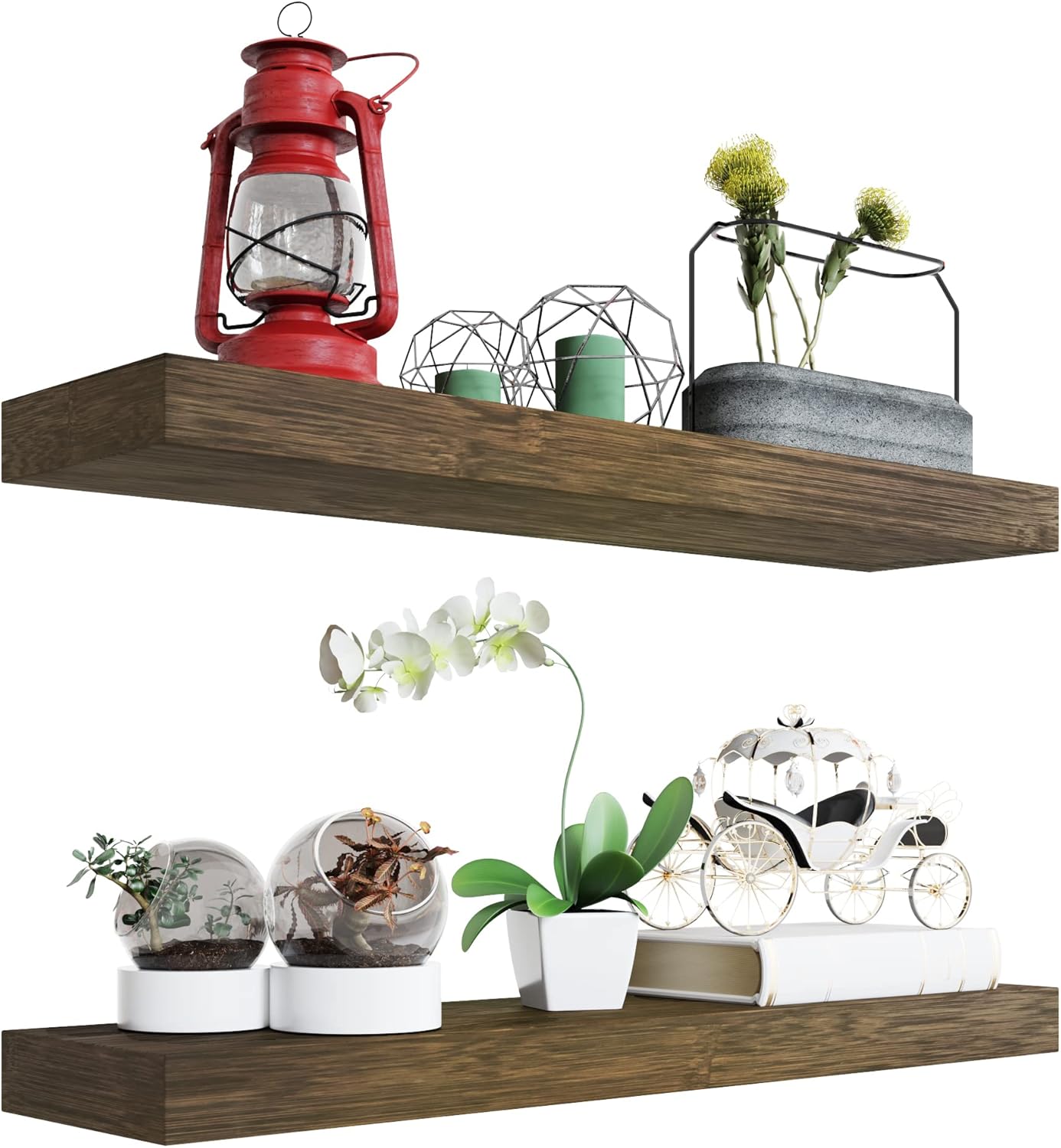
These shelves combine rustic wood with modern black metal brackets that stay visible as a design element. The industrial style works perfectly in lofts, modern spaces, or eclectic living rooms. The wood has a warm brown finish with visible grain texture.
The triangle bracket design is both decorative and functional. The metal is powder-coated for durability and supports each shelf securely. Installation is straightforward with included hardware and templates.
Each shelf measures 16 inches long and 6 inches deep. The size is perfect for creating a gallery wall effect with multiple shelves. The exposed bracket style adds architectural interest rather than trying to hide the support system.
Pros:
- Industrial style with visible brackets
- Rustic wood and metal combination
- Powder-coated brackets resist wear
- Installation template included
- Creates architectural interest
- Set of two for gallery arrangements
Cons:
- Exposed brackets require appreciation of industrial style
4. Mkono Floating Shelves for Wall
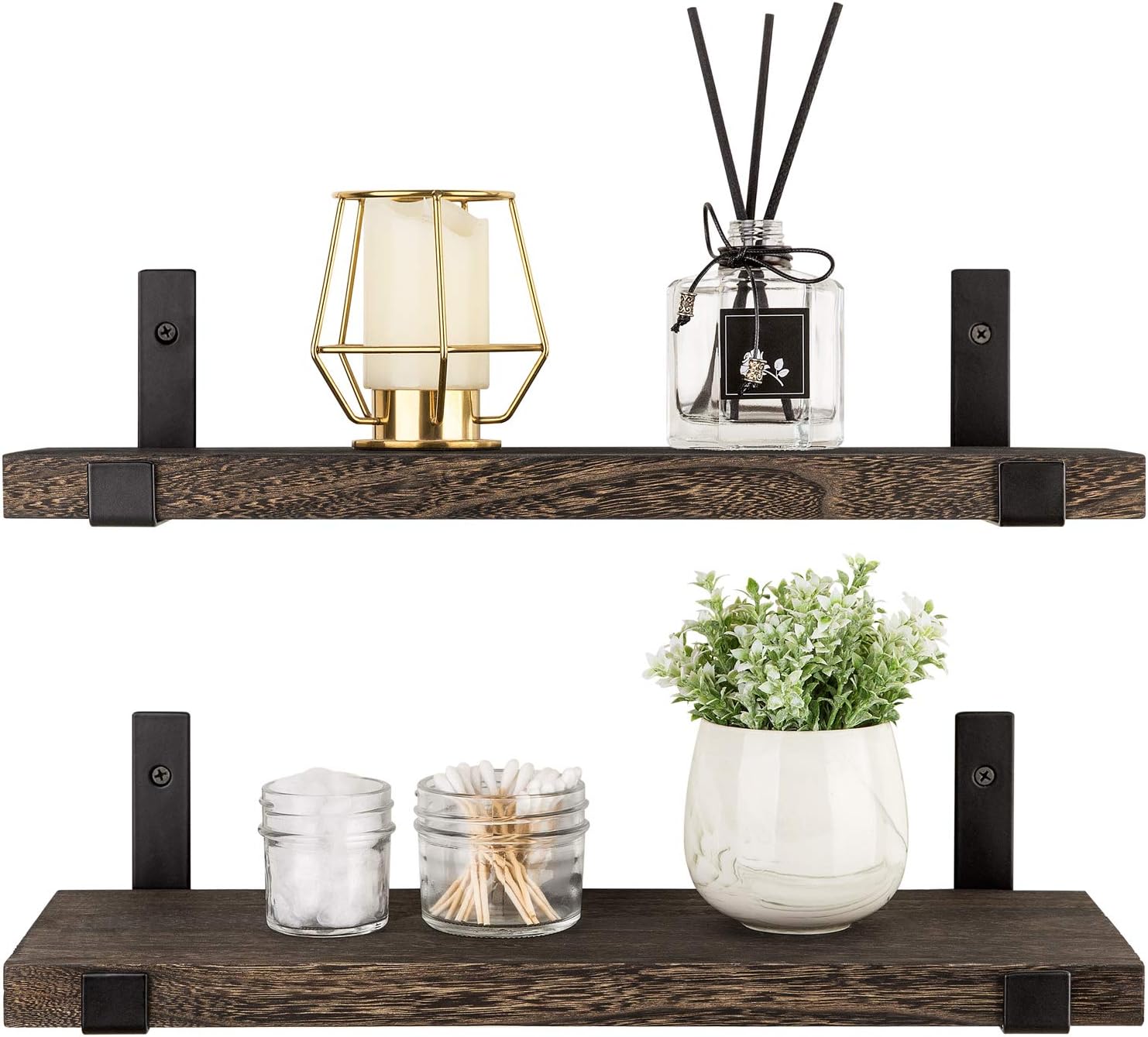
These white floating shelves offer a clean, minimalist look that brightens any space. The MDF construction with white finish resists yellowing over time. The set includes three shelves in identical sizes for uniform display.
Each shelf has a subtle curve that adds softness to the design. The white finish is smooth and easy to wipe clean. The shelves measure 15 inches long, perfect for creating balanced, symmetrical arrangements.
The mounting hardware is straightforward and secure. These shelves work particularly well in Scandinavian, coastal, or modern minimalist spaces. The bright white reflects light and makes rooms feel more open.
Pros:
- Clean white finish brightens spaces
- Resistant to yellowing over time
- Subtle curved design adds interest
- Easy to clean smooth surface
- Set of three for uniform display
- Works with minimalist aesthetics
Cons:
- White shows scuffs and marks more readily
5. Greenco Set of 3 Floating U Shelves
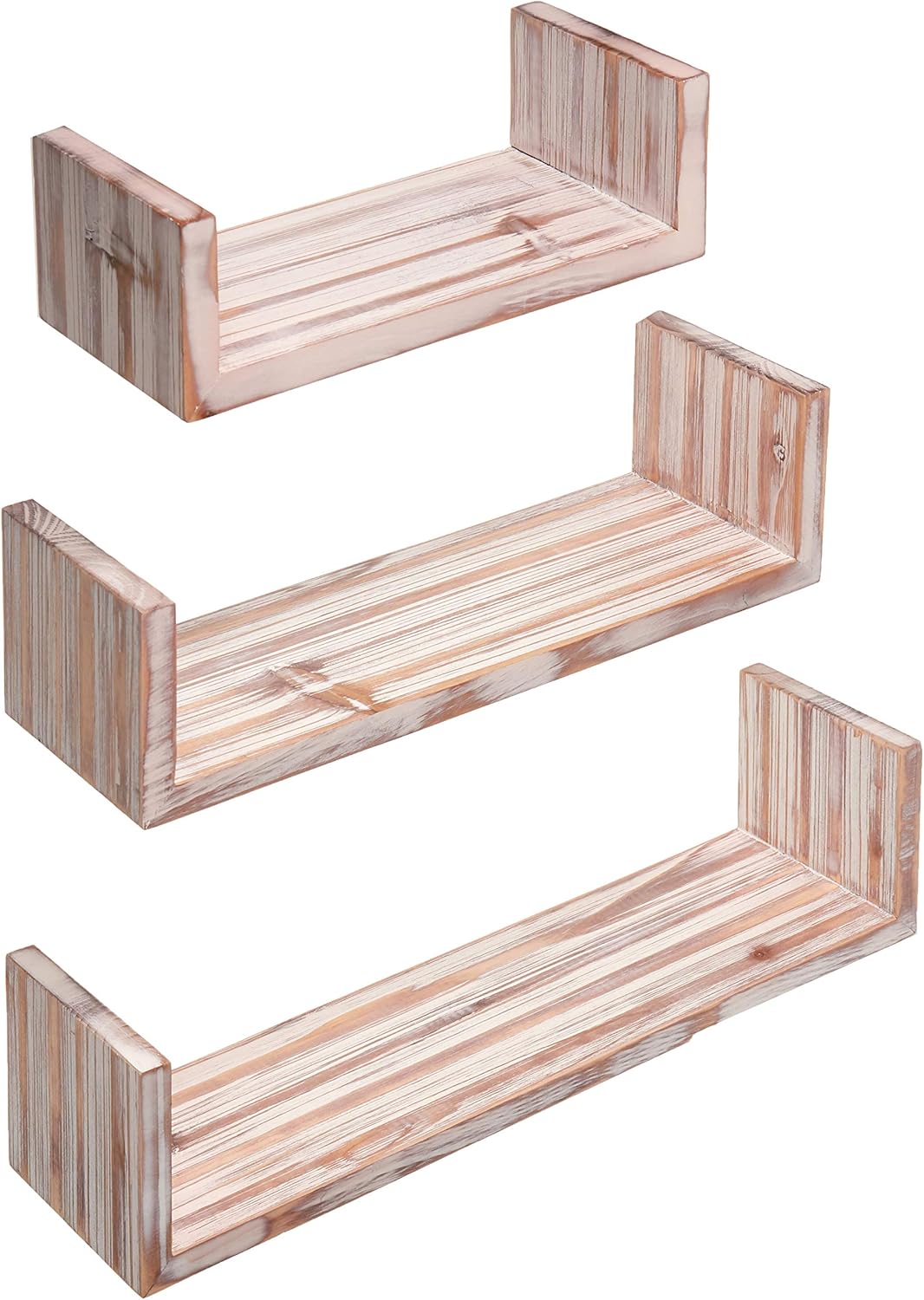
This unique design features U-shaped shelves that create interesting geometric displays. The espresso brown finish has a classic look that coordinates with traditional and transitional decor. The three different sizes nest together or display separately.
The U-shape lets you create dimensional arrangements on your wall. You can place items inside the U or on top of it. The varied sizes add visual interest when grouped together.
Installation is simple with included mounting hardware. The lightweight design won’t overwhelm smaller walls. These shelves are perfect for displaying small plants, candles, or collectibles.
Pros:
- Unique U-shape creates dimension
- Three sizes for varied display
- Classic espresso finish
- Multiple arrangement options
- Lightweight and easy to install
- Perfect for small decorative items
Cons:
- Shape limits larger book storage
6. DAKODA LOVE Clean Edge Floating Shelf
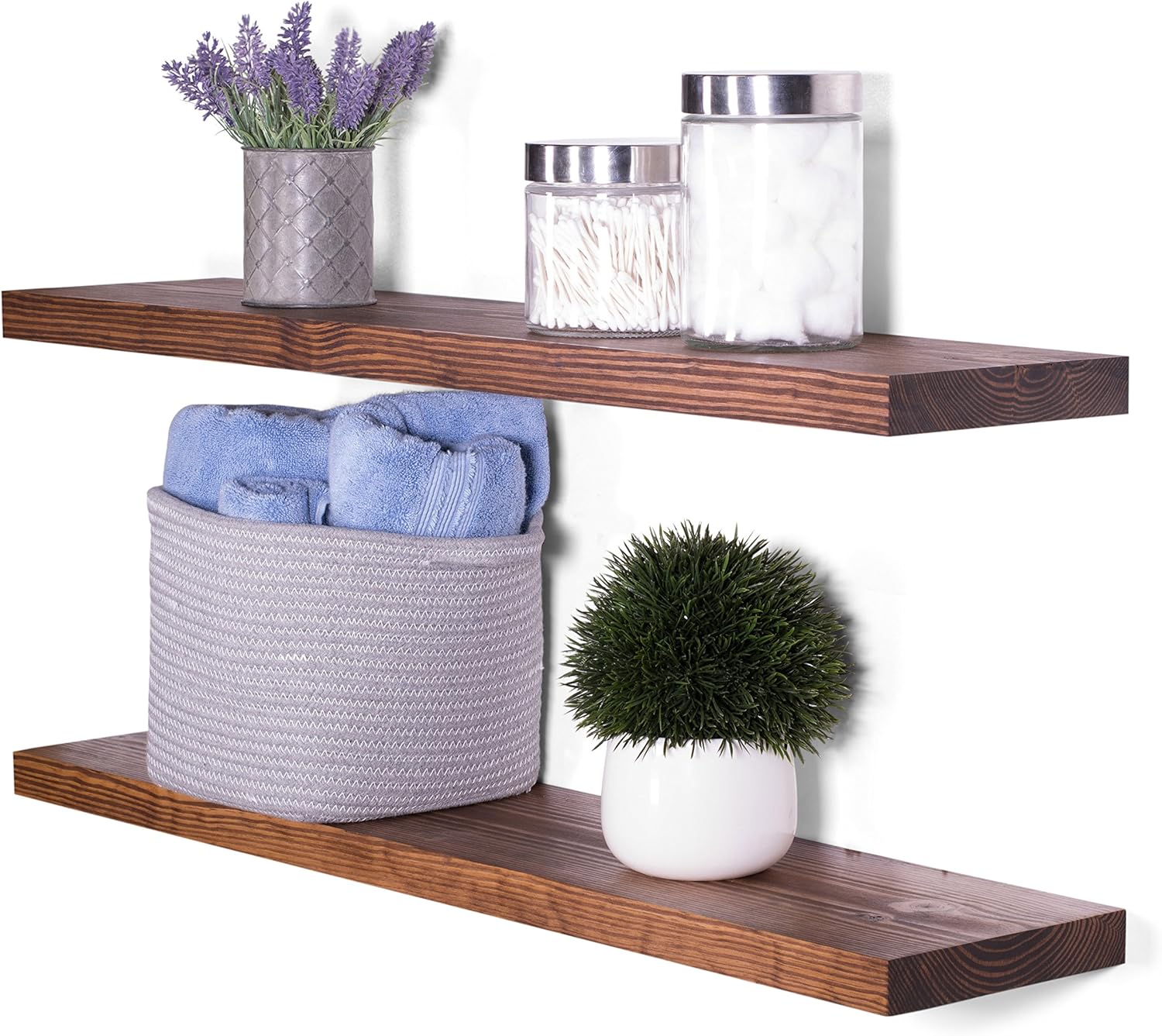
This handcrafted shelf features clean, straight edges with a modern aesthetic. Made from solid pine wood, it’s sturdier than particle board alternatives. The natural wood grain shows through the finish beautifully.
Available in lengths from 24 to 48 inches, you can choose the size that fits your wall perfectly. The depth is ideal for books, frames, and medium-sized decor items. Installation brackets are concealed completely for that seamless floating appearance.
The craftsmanship quality stands out immediately. Corners are perfectly squared, the finish is smooth and even, and the wood feels substantial. This shelf works equally well alone as a statement piece or grouped with others.
Pros:
- Handcrafted from solid pine wood
- Multiple length options available
- Clean, modern straight edges
- Concealed mounting brackets
- High-quality craftsmanship
- Substantial weight capacity
- Natural wood grain visible
Cons:
- Higher price reflects handcrafted quality
Best Floating Shelves for Living Room (Buying Guide)
1. Weight Capacity and Mounting Requirements
Check weight capacity before buying any floating shelf. Most shelves hold between 10 to 30 pounds depending on construction and mounting method. Consider what you plan to display and choose shelves rated for that weight plus a safety margin.
Proper installation is crucial for weight capacity. Always mount shelves into wall studs when possible rather than just drywall. Use appropriate anchors if studs aren’t located where you want shelves. The included hardware might not be sufficient for your specific wall type.
Solid wood shelves generally support more weight than hollow or particle board options. Metal brackets provide stronger support than hidden plastic mounting systems. Read installation instructions carefully and don’t exceed rated capacities.
2. Material Quality and Durability
Solid wood shelves last longer and support more weight than engineered wood. Pine, oak, and walnut offer different aesthetics and price points. Real wood develops character over time while particle board can sag or chip.
MDF (medium-density fiberboard) offers a budget-friendly middle ground. It takes paint well and resists warping. However, it’s heavier than real wood and less strong. Metal shelves work for industrial styles and are extremely durable.
Consider your climate when choosing materials. Solid wood expands and contracts with humidity changes. MDF is more stable but can deteriorate if it gets wet. Metal resists both but may feel cold in some design schemes.
3. Length and Depth Proportions
Shelf length should relate to your wall size and what you’re displaying. Longer shelves (36-48 inches) work for large walls and book collections. Shorter shelves (12-24 inches) suit smaller spaces and minimal displays.
Depth matters for functionality. Standard 6-8 inch depth accommodates most books and frames. Deeper shelves (10-12 inches) hold larger items but protrude more into the room. Shallow shelves (4-6 inches) work for lightweight decorative objects.
Consider sight lines from different angles in your living room. Shelves that are too deep can look bulky from certain positions. Multiple shallow shelves often work better than one deep shelf.
4. Style Compatibility with Your Space
Floating shelves should enhance your existing decor rather than clash with it. Rustic wood shelves complement farmhouse and cottage styles. Sleek white or black shelves suit modern and minimalist spaces. Live edge shelves work beautifully in organic, bohemian, or contemporary settings.
Consider your wall color when choosing shelf finish. Dark shelves create contrast against light walls and vice versa. Matching wood tones to existing furniture creates cohesion. Contrasting finishes add visual interest but require careful balancing.
The mounting style affects aesthetics too. Invisible brackets create clean, floating lines. Visible brackets can be decorative elements in industrial or traditional designs. Choose based on whether you want brackets to disappear or contribute to the look.
5. Installation Complexity and Wall Type
Some floating shelves install in minutes while others require more skill. Consider your DIY comfort level honestly. Systems with templates and pre-drilled holes are beginner-friendly. Invisible mounting systems may require more precision.
Your wall type affects installation significantly. Drywall needs anchors or stud mounting. Plaster walls require special anchors and more care when drilling. Brick or concrete needs masonry bits and appropriate hardware.
If you rent, check what wall modifications are allowed. Some systems create larger holes than others. Patch-and-paint requirements vary by mounting method. Lighter shelves with smaller mounting hardware are typically more rental-friendly.
6. Arrangement and Placement Strategy
Plan your arrangement before drilling holes. Use painter’s tape to mark shelf positions on the wall. Step back and evaluate from different angles. Consider both aesthetic balance and practical access.
Height matters for functionality and design. Eye-level shelves showcase important items. Higher shelves work for decorative objects you won’t access often. Lower shelves keep frequently used items within easy reach.
Mix shelf lengths for visual interest or keep them uniform for symmetry. Asymmetrical arrangements feel dynamic and modern. Symmetrical layouts create calm, traditional vibes. Consider your room’s style and your personal preference.
Creating Cohesive Shelf Displays
Styling floating shelves well makes the difference between cluttered and curated. Start with larger items as anchors, then fill in with smaller pieces. Books, plants, frames, and decorative objects should vary in height and size.
The rule of three works beautifully for shelf styling. Group objects in odd numbers for visual appeal. Vary heights within groupings to create rhythm. Leave some empty space so displays don’t feel crowded.
Layer items front to back for depth. Place taller items in back, shorter in front. Lean artwork or mirrors against the wall behind other objects. This layering creates dimension and interest.
Repeat colors and materials across multiple shelves for cohesion. If you have greenery on one shelf, echo it on another. Repeated finishes or textures tie separate shelves into a unified display. Balance heavy visual weight across the arrangement.
Conclusion
The best floating shelves for living rooms should transform empty walls into functional, beautiful displays. Whether you choose rustic wood, sleek modern designs, or industrial metal combinations, quality shelves enhance your living room while solving storage challenges.
Start with one or two shelves to test placement and styling. Add more as you determine what works in your space. Proper installation ensures shelves stay secure and look great for years. Your living room walls deserve better than being blank.
Frequently Asked Questions
1. How much weight can floating shelves really hold?
Weight capacity varies significantly based on shelf material and mounting method. Most quality floating shelves hold 15-25 pounds when properly installed into wall studs. Solid wood with heavy-duty brackets can support 30-40 pounds or more.
The key is proper installation. Mounting into studs versus drywall alone makes a huge difference. Use appropriate anchors if studs aren’t positioned where you need them. Never exceed the manufacturer’s stated weight limit regardless of how secure the installation seems.
2. Do floating shelves damage walls?
Any wall-mounted item creates holes, but floating shelf damage is minimal and repairable. The mounting hardware typically requires pilot holes that can be filled with spackle when you remove the shelves. Some systems use fewer or smaller holes than others.
Damage risk comes from improper installation or overloading shelves. If a shelf falls, it can tear out larger wall sections. Follow installation instructions carefully and mount into studs when possible. Use proper anchors for your wall type to minimize damage risk.
3. How do I keep floating shelves level?
Use a level during installation and mark your mounting points carefully. Most floating shelf kits include installation templates that help ensure level placement. Measure from the ceiling or floor at multiple points rather than trusting walls to be level.
For invisible bracket systems, make sure both brackets are perfectly level with each other. Even slight variations become obvious once the shelf is installed. Take your time during installation because repositioning after drilling creates extra holes.
4. Can I install floating shelves without drilling into studs?
Yes, but weight capacity decreases significantly. Use heavy-duty drywall anchors rated for the weight you plan to display. Toggle bolts or molly bolts work better than plastic expansion anchors for floating shelves.
Even with good anchors, avoid placing heavy items on drywall-mounted shelves. Reserve them for lightweight decorative objects. Books, plants, and heavy frames require stud mounting for safety. Consider shelf placement during planning to align with stud locations.
5. What’s the ideal height for floating shelves in a living room?
Eye level (60-65 inches from the floor) works well for shelves you’ll access frequently. Higher placement (70-75 inches) suits decorative displays. Lower shelves (40-50 inches) work above furniture like sofas or consoles.
Consider sight lines from seating areas. Shelves at sitting eye level create nice focal points. Multiple shelf arrangements should feel balanced rather than all clustered at one height. Vary heights for visual interest while maintaining overall cohesion.
6. How far apart should I space multiple floating shelves?
Spacing depends on what you’re displaying and the visual effect you want. For book storage, 10-12 inches between shelves accommodates most books. For decorative objects, 12-18 inches allows room for taller items.
Aesthetically, consider your wall size and ceiling height. Shelves spaced too close feel cramped. Too far apart and they lose visual connection. Use painter’s tape to mock up spacing before drilling. Step back to evaluate balance from across the room.
7. How do I clean and maintain floating shelves?
Dust regularly with a microfiber cloth or vacuum attachment. For wood shelves, use furniture polish occasionally to maintain finish. Wipe spills immediately to prevent staining or water damage.
Check mounting brackets periodically to ensure they remain secure. Tighten any loose screws before they cause problems. Redistribute weight if you notice any sagging. Proper maintenance keeps shelves looking great and functioning safely for years.